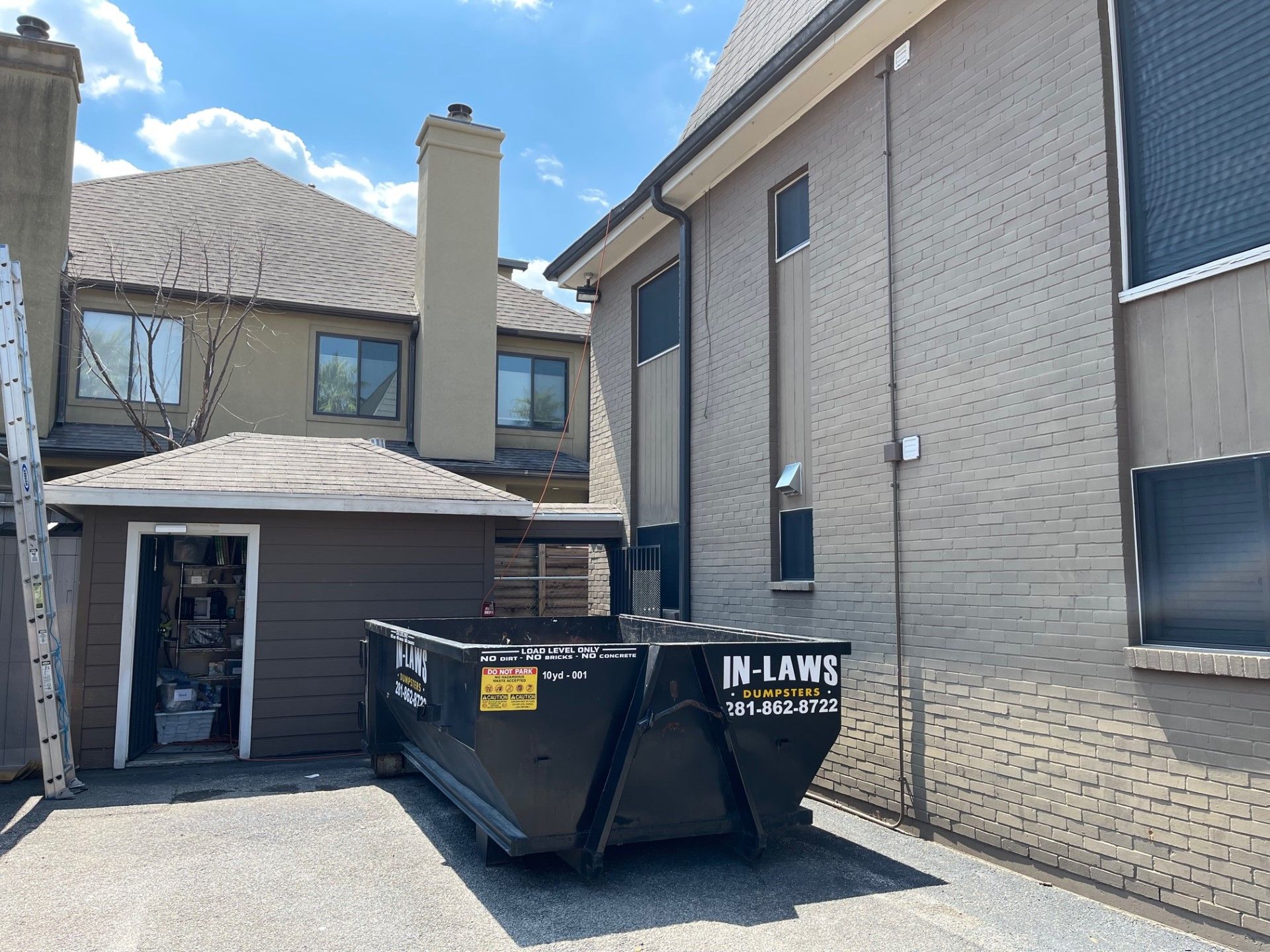
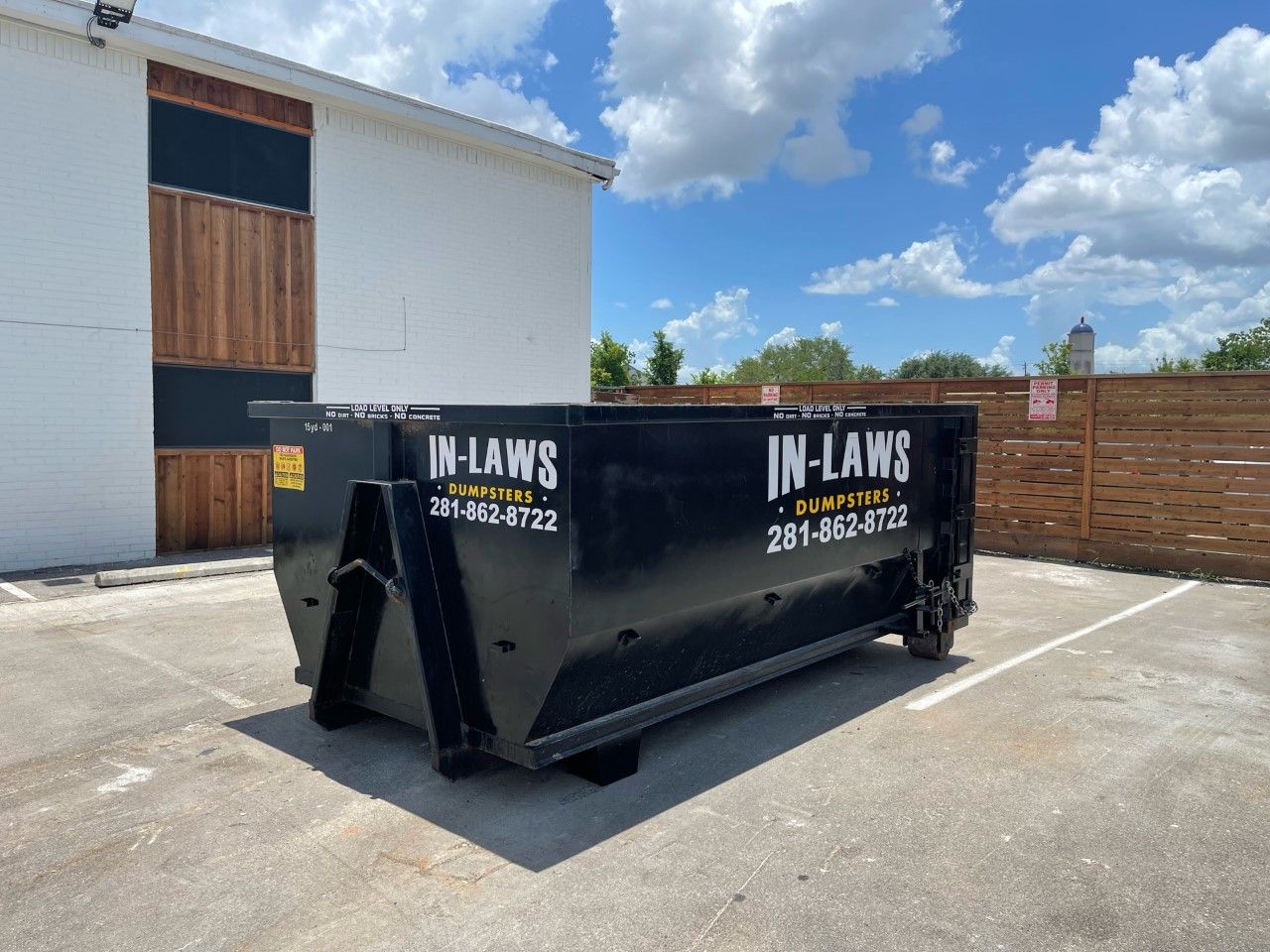
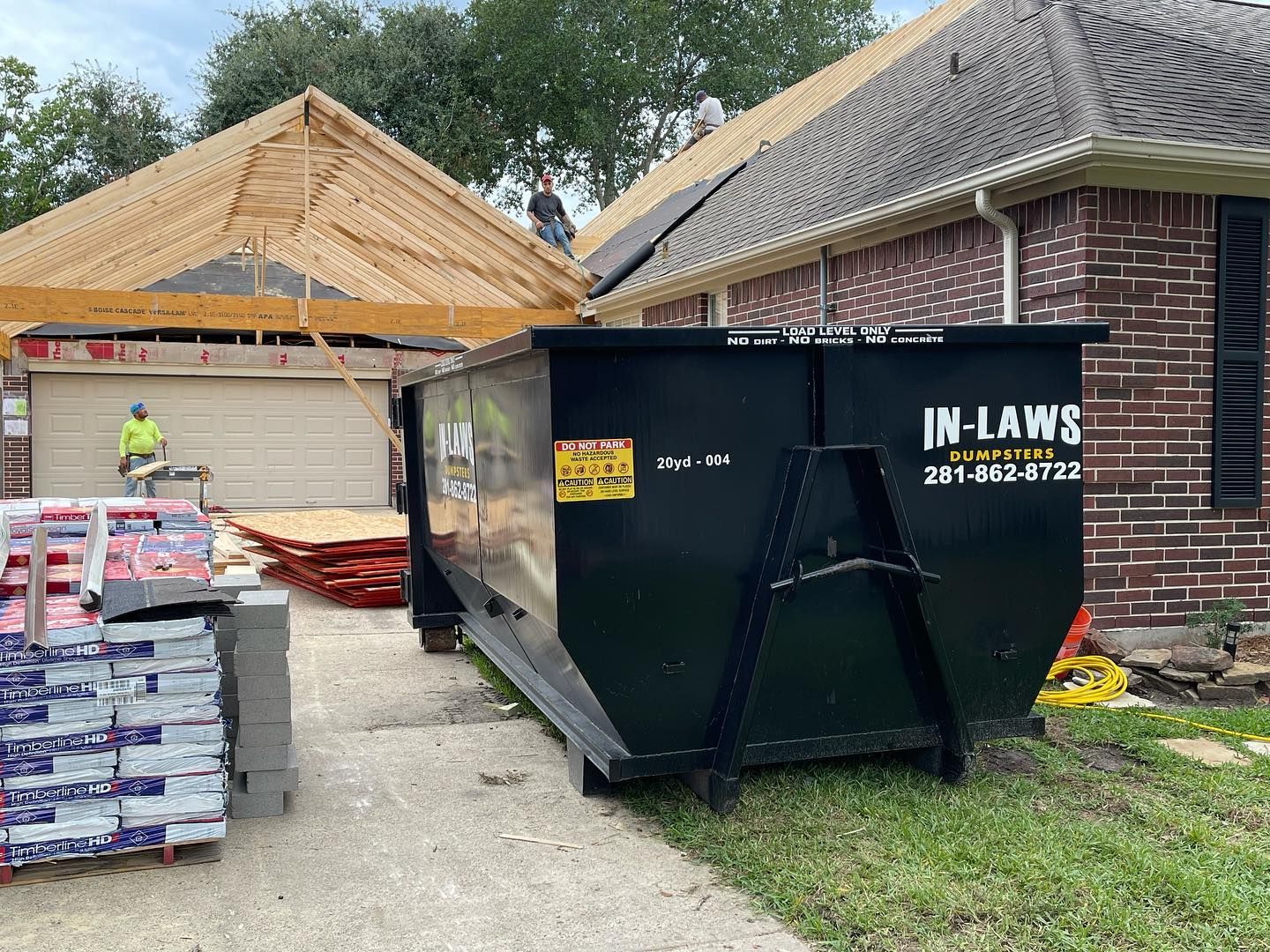

Fence Removal Dumpster Rental in Houston: A Guide to Fence Replacement
Fence Removal Dumpster Rental in Houston: A Homeowner’s Guide to Fence Replacement
The new fence usually gets all the attention. You’re choosing the height, comparing materials, and deciding whether that stubborn gate should finally move to a better spot. Meanwhile, the old fence is still leaning across the backyard, waiting for someone to figure out where it will go.
That last detail deserves a place in the project plan.
A fence removal dumpster rental provides a designated place for approved fencing debris while the replacement moves forward. However, choosing a container is only part of the job. You also need to describe what’s coming down, coordinate with the installer, and separate materials that require another disposal arrangement.
At In-Laws Services, we offer 10-yard, 15-yard, and 20-yard dumpsters for Houston and surrounding communities. This guide focuses on the disposal decisions that come with fence replacement, from the first conversation with your installer to the final pickup.
When Does Fence Replacement Call for a Dumpster?
Replacing a few damaged pickets creates a different cleanup job from removing an entire backyard enclosure. Before arranging disposal, take an honest look at the amount of material coming out.
A dumpster is worth discussing when the project includes several fence runs, complete panels, posts, rails, gates, or additional approved outdoor debris. It may also help when you want the removal crew to load material as they work rather than build a separate debris pile.
For a very small repair, ask the installer how they handle the removed pieces. Their existing disposal arrangement may cover the work.
The important question isn’t simply whether you’re replacing a fence. It’s whether the removal scope calls for a dedicated container.
Look Beyond the Visible Boards
The fence face is only part of the load. Rails, posts, lattice, decorative caps, and gates belong in the project description too.
A privacy fence with overlapping boards produces a different pile from a lighter fence of the same length. Likewise, replacing posts adds material that a board-only repair leaves behind.
Tell us what the installer expects to remove, not just what the fence looks like from the patio.
Include Related Work Before Booking
Fence replacement sometimes becomes a larger backyard project. You may also remove an old gate enclosure, clear approved brush, or replace damaged outdoor features.
Mention those additions before choosing a dumpster. Don’t reserve for fencing alone and assume every other cleanup item can join the load.
Our demolition guidance lists fencing among accepted materials, but approval for one material does not automatically cover everything around it.
Describe the Removal Scope Before Choosing a Container
The most useful rental conversation starts with a clear project description. You don’t need a perfect debris calculation, but a few measurements and photographs help explain the work.
Walk the fence line with your installer before calling. Mark the sections that will remain and those scheduled for removal.
Measure the Fence Length and Height
Record the approximate linear footage coming down. If you’re replacing only the back section, don’t include the side fences in that number.
Also note the height. A taller privacy fence contains more material than a shorter fence of similar construction.
If measurements are approximate, say so. We would rather discuss a reasonable estimate than have you guess at an exact figure that leaves out half the project.
Identify Materials and Attached Features
Tell us whether the fence contains wood, vinyl, composite products, chain link, or metal components.
Include gates, lattice extensions, privacy screens, and anything attached to the fence. Photographs can clarify mixed materials and unusual construction.
Our published demolition list includes fencing. However, confirm your particular combination of materials with us before loading, especially when the project involves products beyond ordinary wood fencing.
Confirm Whether Posts and Footings Are Coming Out
Ask the installer directly: “Are you removing the posts, the concrete, or both?”
That answer affects disposal planning. A quote for replacing boards and rails may leave the existing posts in place. A full replacement may involve removing them.
Concrete needs separate handling under our dumpster rules. Knowing that before removal starts prevents the wrong material from reaching the container.
Houston Properties Need Property-Specific Planning
Fence replacement looks different across Houston. A bungalow with a narrow side yard creates a different carrying route from a single-story ranch home with a wide driveway. A townhome may have a compact outdoor enclosure and shared access to consider.
Even two similar houses can present different disposal challenges.
One homeowner may have a clear path from the backyard to the driveway. Another may need to work around air-conditioning equipment, landscaping, gates, or a detached garage.
Start with the property as it exists today, not the space you expect to have after the fence comes down.
Walk the Loading Route
Trace the path from each removal area to the proposed dumpster location.
Look for tight corners, steps, uneven ground, and objects that narrow the route. Decide where the crew can carry or move material without crossing flower beds or blocking a doorway.
Don’t assume your neighbor’s driveway or side yard will be available. If access depends on another property, settle that arrangement before the work begins.
Make Room for Daily Life
Your house still needs to function during the project. Someone may need to leave for work, bring groceries inside, or get children out the door.
A container that blocks the only usable parking spot can create a problem that lasts all week.
Discuss which vehicles must move, how the garage will remain accessible, and where new fencing supplies will go. Those decisions belong in the placement conversation.
Coordinate Shared Fence Lines Before Scheduling Removal
A fence may divide two yards, but the replacement project can affect both households.
Before scheduling disposal, confirm the agreed removal scope with everyone involved. This is especially helpful when one neighbor is replacing several sides while another is addressing only a shared section.
We handle the rental arrangement. We do not determine property boundaries, fence ownership, or how neighbors should divide project costs.
Agree on Access and Temporary Conditions
Talk through practical details:
- Which gate or access route will the crew use?
- Will anyone need to enter the neighboring yard?
- When will the shared section be open?
- Who will move belongings away from the fence?
- Who will communicate schedule changes?
A short conversation can prevent the installer from arriving to a locked gate or an uncleared work area.
Plan for Pets Before the Fence Opens
An existing fence may serve as your everyday pet boundary. Once removal begins, the yard no longer works the same way.
Arrange secure indoor space or another suitable plan before the crew starts. Don’t depend on a partially standing fence or a stack of removed panels to keep animals contained.
Ask the installer whether removal and installation will happen in sections. Even then, plan for a temporary loss of enclosure.
Decide Who Books and Manages the Dumpster
Some fence contractors include haul-off in their proposal. Others expect the homeowner to arrange disposal. Either approach can work, but the responsibility should be clear before delivery.
A fence removal dumpster rental should support the installer’s schedule rather than operate as a separate project nobody coordinates.
Review What the Installer’s Quote Covers
Ask whether the proposal includes:
- Removing the old fencing.
- Loading debris.
- Removing posts and concrete footings.
- Arranging the dumpster or another disposal method.
- Cleaning up installation scraps.
- Paying disposal-related charges.
“Removal included” does not tell you everything. Clarify whether that means dismantling, loading, haul-off, or all three.
Choose One Rental Contact
Name one person to communicate with us about delivery, extensions, and pickup.
If you reserve the container, share the accepted-material rules and rental terms with the installer. If the contractor reserves it, make sure you understand where it will sit and when it should leave.
A single point of contact helps avoid conflicting instructions, especially when weather or installation changes the schedule.
Choosing a Dumpster for Fence Removal
We provide 10-yard, 15-yard, and 20-yard dumpsters. The right option depends on the amount and type of fencing, how completely it will be removed, and whether other approved debris will share the container.
We don’t recommend choosing from linear footage alone. Fence height, construction, posts, and loading arrangement all affect the load.
When to Discuss a 10-Yard Dumpster
A limited replacement project may justify discussing our smallest container, the 10-yard dumpster.
Be specific about what remains in place. Removing boards from one section is different from removing complete sections with rails and posts.
Also consider whether the installer will break material into manageable pieces. Bulky assemblies can use space inefficiently.
When to Discuss a 15-Yard Dumpster
A 15-yard container provides more room when the removal scope grows beyond a small section.
Tell us about the full project rather than assuming that a “medium” fence automatically matches a particular size.
Include gates and construction scraps in the conversation if they will be part of the approved load.
When to Discuss a 20-Yard Dumpster
A larger enclosure or a project with additional approved debris may call for discussing our 20-yard option.
It is our largest available container. More volume, however, does not mean unlimited weight or permission to load above the walls.
Confirm the rental’s included weight allowance and loading requirements before work begins.
Confirm Accepted Materials Before Anything Goes In
Our demolition guidance lists fencing, framing lumber, and trim among accepted materials. It also excludes concrete, bricks, dirt, hazardous materials, and flammable substances.
That distinction matters during fence replacement because different materials can leave the ground together.
Keep Concrete Footings Out
Concrete cannot go in our demolition dumpsters. That includes broken footings and concrete still attached to removed fence posts.
Before removal, tell the installer that concrete needs another disposal arrangement. Don’t wait until a post reaches the dumpster to decide what happens next.
Brick columns and soil from excavation also need separate planning under our published restrictions.
Ask About Uncertain Fence Materials
Tell us about treated lumber, coated components, composite products, or unfamiliar materials before loading.
Don’t assume that a product’s appearance tells you whether we can accept it. Describe it, provide a photograph when useful, and wait for confirmation.
If the project changes during removal, check with us before adding newly discovered materials to the load.
Keep Chemicals and Backyard Extras Separate
Fence work may uncover old paint, stain, batteries, fuel containers, or other items stored along the property line.
Those materials are not fencing debris. Our restrictions prohibit hazardous materials and flammable substances, including household chemicals, gasoline, and propane tanks.
Clear unrelated items before the crew arrives so they don’t become part of the cleanup by mistake.
Schedule Disposal Around Removal and Installation
The dumpster should be ready when approved debris starts coming down. That sounds straightforward, but the installer’s sequence determines what “ready” means.
Some projects remove and replace one section at a time. Others clear the entire enclosure first.
Ask for the expected work sequence before reserving the rental period.
Match Delivery to the Actual Start Date
Confirm the planned removal day and discuss delivery timing with us.
Avoid booking solely around a tentative date when materials, approvals, or contractor availability remain unresolved.
At the same time, don’t wait until the old panels are stacked across the driveway. Disposal should be part of the preparation, not an emergency decision halfway through the job.
Decide Whether to Keep the Container Through Installation
Keeping the dumpster through replacement may allow the crew to include approved offcuts and final cleanup debris.
However, if removal fills the container or installation will happen much later, another arrangement may make more sense.
Discuss the expected amount of waste from both phases. Don’t assume a container selected for teardown will have room for everything afterward.
Allow for Changes Without Losing Track of the Rental
Our published standard rental options include three-day and seven-day periods, with extension charges listed separately. Confirm current availability and terms when booking.
If the installer’s schedule changes, contact us promptly. An early conversation gives us a clearer picture than a last-minute request after the agreed rental period ends.
Prepare the Placement Area for the Entire Project
A convenient location needs to work for a smooth delivery, loading, installation, and pickup.
The nearest spot to the old fence may not provide suitable truck access. Likewise, an open driveway can become crowded once new panels, posts, and equipment arrive.
Review the location with both us and the installer.
Keep New Supplies Separate
Reserve a staging area for replacement materials.
Don’t place new posts, boards, or gate hardware against the dumpster or in the truck’s access route. The container must remain available for loading and removal.
Keeping new supplies separate also prevents usable materials from getting mixed into the debris.
Check Local Placement Requirements
If you’re considering a public street or another public area, confirm applicable requirements with the local authority before delivery.
Our website advises checking with the relevant city or county about placement permissions. Rules can differ across Houston-area jurisdictions, so don’t rely on what worked at a friend’s house in another community.
Also review any association requirements that apply to temporary containers and exterior projects.
Account for Houston Weather Without Making It the Whole Story
Houston’s heat, humidity, and rainfall deserve attention during any outdoor project. National Weather Service climate records document substantial rainfall throughout the year, so a fence replacement schedule should include room for weather changes.
That does not mean every project needs a long delay allowance. It means avoiding a plan that depends on uninterrupted perfect conditions.
Discuss how the installer handles rain delays and when they will notify you about changes.
Don’t Assume the Lawn Is Suitable for Delivery
A wide backyard does not automatically offer a suitable route for the delivery vehicle.
Soft ground, limited access, and property conditions can affect placement. Discuss the proposed surface with us rather than planning for the truck to cross the lawn without review.
Keep the agreed route clear before delivery and pickup.
Keep Rental Deadlines Separate From Work Decisions
For DIY removal, don’t let a pickup date push you into working in unsafe weather or beyond your ability.
For contractor-led projects, ask for an updated schedule when conditions change.
The container supports the project. It should not become a reason to rush removal or accept an unsafe working arrangement.
Storm Damage: Adjust the Plan to the Actual Condition
Storm damage can turn a planned replacement into an urgent cleanup. Houston-area fence contractors regularly address fallen sections, broken rails, and failed posts after severe weather.
Still, not every damaged fence needs complete removal.
Have the installer assess which sections require replacement before choosing a dumpster. The disposal plan should reflect that assessment, not the size of the entire enclosure.
Document Before Cleanup When Appropriate
If you plan to contact an insurer, ask what documentation they need before you discard damaged material.
Take photographs where it is safe to do so, and keep project records together. We cannot determine insurance coverage or documentation requirements.
Resolve those questions before debris leaves the property.
Keep Unsafe Areas Off Limits
A leaning or tangled fence is not simply a pile of loose boards.
Keep people and pets away from unstable sections. If damage involves utility lines or equipment, contact the appropriate utility or qualified professional rather than attempting removal.
We provide a place for approved debris. A dumpster rental does not include evaluating storm-damaged structures or utilities.
Load Fencing Without Creating Another Cleanup Problem
Fence panels can occupy space quickly when they remain bulky or sit at awkward angles.
Our demolition guidance recommends breaking approved debris down so it fits more efficiently and keeping the load level with the container’s top rail.
Leave dismantling and cutting to someone equipped to handle the task safely. The objective is an orderly load, not forcing oversized sections into the box.
Spread material through the available space instead of building a tall mound in one area.
Keep boards and rails inside the container. Don’t allow pieces to project beyond its sides, and don’t climb unstable debris to make more room.
If the dumpster approaches its loading limit before removal ends, stop and contact us. We can discuss available next steps before an overfilled load creates a pickup problem.
Understand the Quote Before Reserving
A useful fence disposal budget accounts for more than container size.
Confirm the rental period, included disposal weight, additional-weight charges, extension terms, and delivery pricing for the address.
Our published pricing identifies weight overages, extra rental days, and distance-related charges as potential additions to the base rate. Use the current booking quote for your project rather than assuming a listed starting price covers every circumstance.
We serve Houston and nearby communities including Channelview, Crosby, Highlands, Baytown, Pasadena, Deer Park, La Porte, Humble, Atascocita, and others around East Houston. Confirm service and any distance charges for the exact project address.
Fence Removal Dumpster Rental Questions
What size dumpster do I need for fence removal?
We offer 10-, 15-, and 20-yard dumpsters. Tell us the approximate fence length and height, material, number of gates, and whether posts will be removed. We use the full removal scope to discuss a suitable container rather than assigning a size from linear footage alone.
Can concrete attached to fence posts go in the dumpster?
No. We do not accept concrete, brick, or dirt in our demolition dumpsters. Concrete attached to posts needs a separate disposal arrangement. Confirm the footing-removal plan with your installer before loading begins.
Can old wood fencing go in the rental?
Our demolition guidance lists fencing and framing lumber among accepted materials. Tell us about the specific wood, coatings, and any mixed components before loading so we can confirm the proposed debris. Keep prohibited materials separate.
Should I arrange the dumpster or have my installer book it?
Either approach can work. We recommend deciding before removal starts and naming one rental contact. Confirm who books the container, loads it, pays additional charges, and requests pickup. Make sure your installer’s proposal clearly describes disposal responsibilities.
Can I keep the dumpster through fence installation?
You can discuss a rental period covering removal and installation. Approved debris must stay within the container’s loading and weight requirements. We offer standard three-day and seven-day options; confirm availability, pickup arrangements, and extension terms when booking.
Can storm-damaged fencing go in the dumpster?
Our demolition guidance accepts fencing, but we need to confirm the actual materials in the load. Storm cleanup does not change our restrictions on concrete, dirt, chemicals, or other prohibited waste. Tell us if the damaged sections include mixed materials or attached debris.
Finish With a Pickup Plan, Not a Leftover Pile
Before requesting pickup, walk the property with the person responsible for cleanup.
Check behind gates, along shared fence lines, and near the material-staging area. Make sure approved installation scraps have been addressed and prohibited debris remains separate.
Then confirm that the truck’s route is clear. A trailer or stack of new boards can block pickup even when the container itself is ready.
The best fence removal dumpster rental plan connects the whole project: a defined removal scope, clear installer responsibilities, confirmed materials, and a schedule that fits the work.
At In-Laws Services, those are the details we want to discuss before the old fence comes down. With disposal settled, you can give your attention to the replacement and getting the backyard back to normal.