
Cleanout a Houston Garage for Hurricane Season: When a Dumpster Makes Sense
Houston Garage Cleanout Guide for Hurricane Season
In Houston, hurricane season has a way of turning “I’ll get to it later” into “Why is all of this still in the garage?”
Most garages do not become cluttered overnight. It happens a little at a time. A few boxes from the last move get pushed against the wall. Holiday decorations take over a corner. An old grill waits for a repair that never happens. Broken patio furniture, leftover lumber, paint cans, worn-out lawn equipment, and bags of mystery items start gathering dust behind the car.
Then storm season arrives.
The weather forecast starts filling with familiar words: tropical moisture, heavy rain, high winds, possible flooding. Suddenly, that garage is no longer just a storage space. It may need to hold vehicles, outdoor furniture, generators, storm supplies, tools, or other items that need to stay dry and secure.
At In-Laws Services, we have seen how quickly a packed garage can make storm preparation harder. A Houston garage cleanout gives homeowners room to think, room to move, and room to protect the things that actually matter. It can also help reduce clutter that becomes unsafe, damaged by moisture, or impossible to deal with once the rain starts.
This guide explains how to clear an attached or detached garage before hurricane season, what to sort first, which items may need special disposal, and when renting a dumpster is the simplest way to get the job done.
Why a Clean Garage Matters Before Hurricane Season
A garage often becomes the household catch-all. It holds the things people do not want inside but are not ready to throw away. That is understandable. Life moves fast, projects get delayed, and it is easy to think the garage can absorb one more box.
But during hurricane season, a crowded garage can create real problems.
When a storm is approaching, people often need to move quickly. They may need to bring patio furniture inside, secure outdoor equipment, find flashlights, move vehicles out of flood-prone areas, or access emergency supplies. A garage full of clutter can make all of that more difficult.
A clean garage also gives you a better chance of protecting your belongings. When everything is piled on the floor, rainwater, roof leaks, wind-driven moisture, or flooding can damage boxes, tools, furniture, and electrical items. When you create space and organize what stays, it becomes easier to store important materials off the ground and away from areas where water may enter.
A Houston garage cleanout is not about making the space look perfect. It is about making it useful again.
Make Room for What Needs Protection
During a severe weather event, a garage may become temporary shelter for items that normally stay outside. Outdoor chairs, planters, bicycles, grills, yard decorations, tools, and children’s toys may need to come in quickly if high winds are expected.
That becomes difficult when the garage is already packed wall to wall.
Think about what you would want to protect first if a storm was expected in the next 24 hours. Would you have room for your vehicles? Could you move patio furniture inside without tripping over old boxes? Could you get to the generator, extension cords, flashlights, or bottled water without digging through a pile of holiday decorations?
If the answer is no, it may be time to clear the space before you need it.
Reduce Tripping, Fire, and Water Risks
A cluttered garage can create more than inconvenience. Loose cords, stacked boxes, old fuel containers, broken equipment, and crowded walkways can become safety issues.
Heavy rain can also turn a small problem into a bigger one. Cardboard gets soft. Loose belongings shift. Water reaches items stored directly on the floor. Old boxes may collapse, making it harder to see what has been damaged and what needs to be moved.
A clear walkway gives you safer access to the garage, especially if you are carrying supplies, moving heavy items, or checking the property after a storm. It also helps you see the floor, walls, outlets, garage door tracks, and other areas that may need attention.
Find Your Storm Supplies Before You Need Them
Many Houston homeowners keep storm-prep supplies in the garage. That may include tarps, flashlights, batteries, coolers, fans, first-aid kits, tools, bottled water, extension cords, and portable chargers.
The problem is that these items are only helpful if you can find them.
A good garage cleanup gives you a chance to collect emergency supplies in one clearly labeled area. Instead of opening fifteen boxes and wondering where the batteries went, you can keep the things you need together and easy to reach.
That small bit of organization can make a busy storm-prep day feel a lot more manageable.
Begin With a Walk Through, Not a Trash Bag
The fastest way to create a frustrating cleanout is to start throwing things away without a plan. The better approach is to take one slow lap around the garage and get a clear picture of what is actually there.
Open the garage door. Stand near the entrance. Look at the space the way you would if you had to use it during a storm.
Where are the blocked walkways? Which corners are packed with boxes? What is sitting on the floor that could be damaged by water? What can you identify right away as trash? What items need a closer look?
You do not have to organize every shelf on the first pass. You just need to make a plan.
Set Up Four Simple Categories
At In-Laws Services, we encourage homeowners to sort garage items into simple categories before they begin loading a dumpster or piling materials near the driveway.
The first category is keep. These are the items you use, need, or want to protect. Tools, storm supplies, seasonal items in good condition, working lawn equipment, important records, and family belongings may all belong here.
The second category is donate or give away. This can include usable furniture, children’s items, sporting equipment, household goods, shelves, working appliances, or tools you no longer need. If the item is clean, functional, and something another person could use, it may deserve a second life.
The third category is recycle or dispose of separately. This is where many homeowners need to slow down. Paint, chemicals, batteries, propane tanks, electronics, refrigerators, freezers, fuel, and certain other materials may require special handling.
The fourth category is dumpster-ready debris. This is the material that is clearly damaged, worn out, broken, unsalvageable, or too bulky for regular trash collection.
Once you separate the piles, the job becomes easier to see. You are no longer cleaning “the garage.” You are dealing with a few clear groups of items.
Do Not Let Sentiment Stop the Whole Project
Garages often hold memories. There may be boxes from a parent’s home, your child’s old school projects, a collection you have not opened in years, or supplies from a hobby you once loved.
You do not have to make every emotional decision in one afternoon.
If you find something you are unsure about, create a “decide later” bin. Give yourself a limit. One tote, one shelf, or one small stack is reasonable. Half the garage is not.
The goal is to keep uncertain items from freezing the project. A Houston garage cleanout works best when you make decisions steadily, not perfectly. Keep what is meaningful and useful. Let go of what has been sitting untouched through several hurricane seasons.
What Usually Belongs in a Garage Cleanout Dumpster
Once you have sorted your belongings, you may find that the disposal pile is larger than expected. That is common. Garages collect bulky items, and bulky items can be difficult to manage through regular curbside pickup.
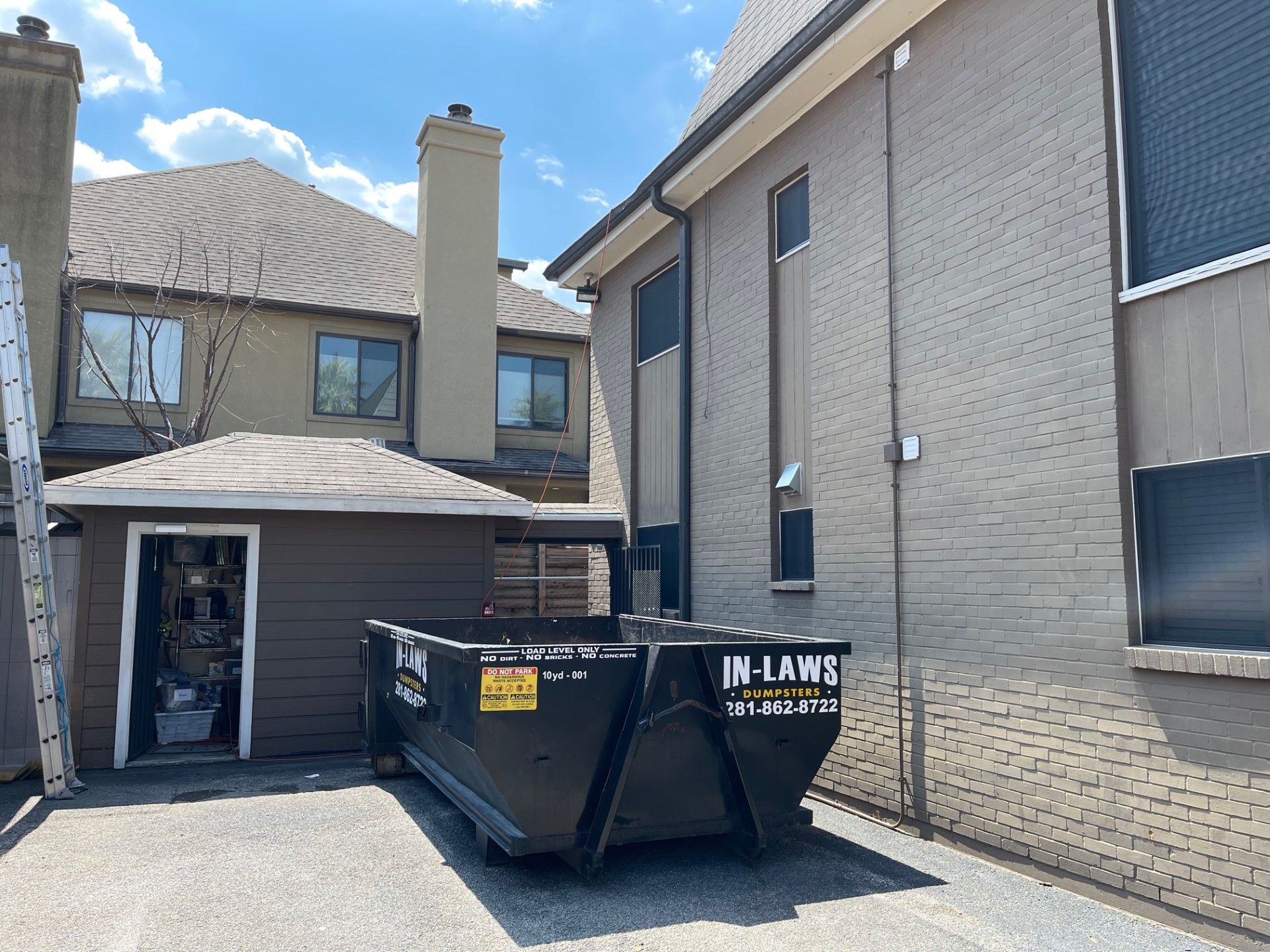
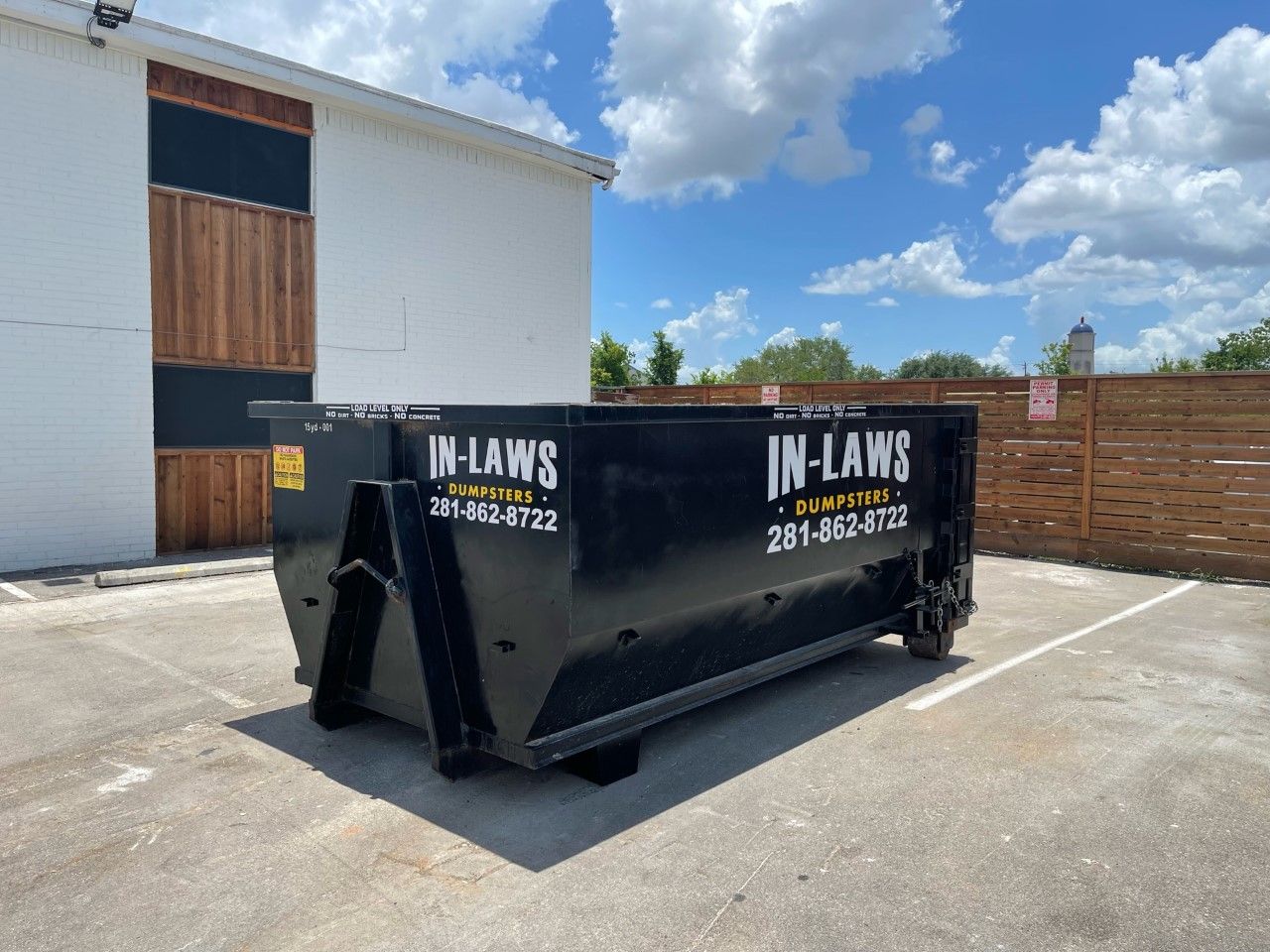
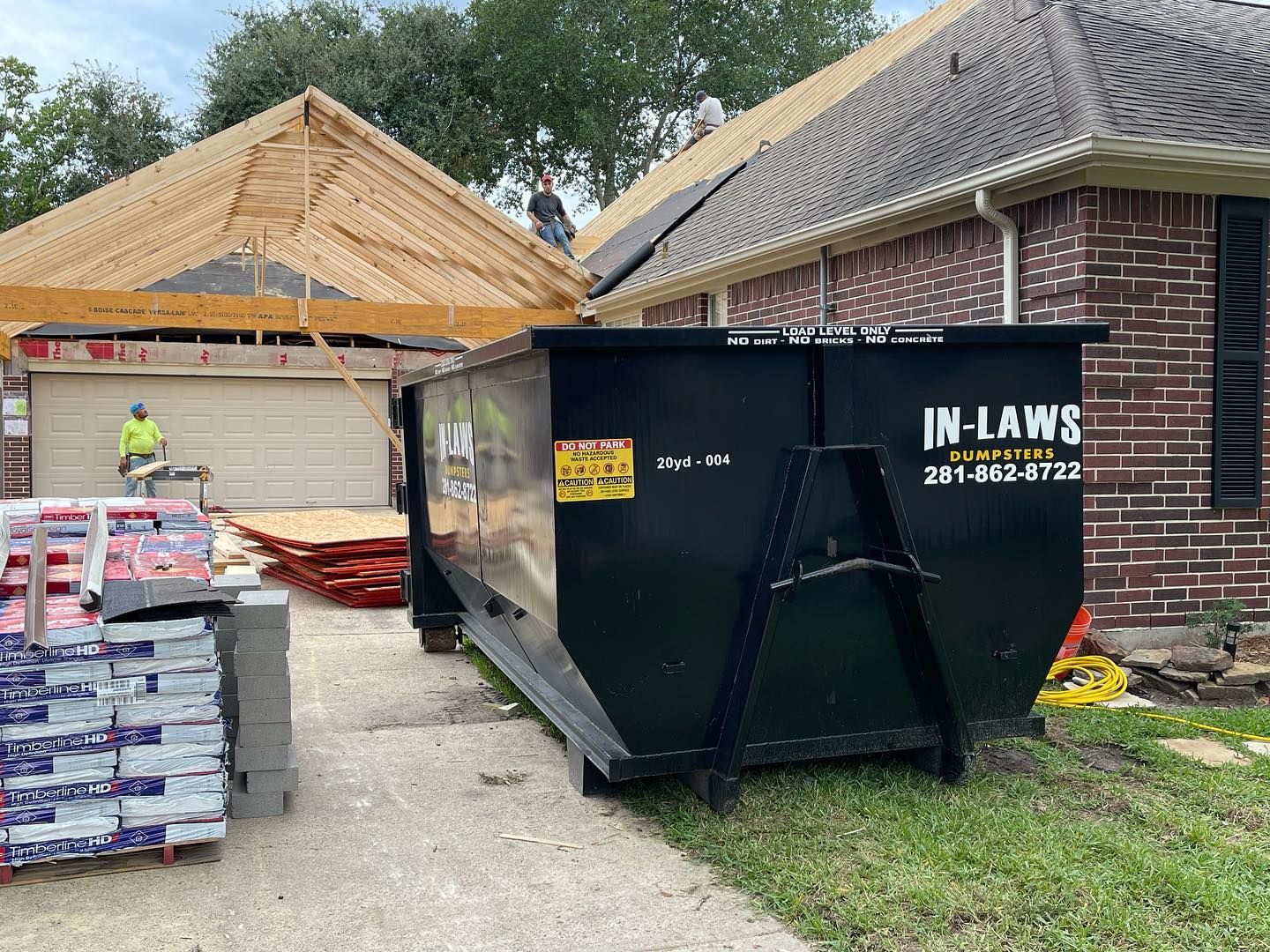
In-Laws Services provides residential dumpster rentals for home cleanups, decluttering projects, yard work, and renovation debris throughout Houston and surrounding communities. Our 10-yard, 15-yard, and 20-yard dumpsters are designed for different cleanup scopes, from smaller projects to more substantial home cleanouts.
For many garage cleanouts, a dumpster makes sense when you have several large items, a long list of broken materials, or enough debris that multiple pickup-truck trips would become a project of their own.
Common Items That May Be Dumpster-Ready
Depending on the condition and material, homeowners often use a dumpster for items such as:
- Broken shelving and damaged storage units
- Old furniture, chairs, tables, and cabinets
- Bed frames and bulky household items
- Torn rugs and carpet remnants
- Damaged lawn furniture
- Non-hazardous household clutter
- Old toys, boxes, and worn-out décor
- Broken tools and non-electronic equipment
- Wood scraps, trim, and non-hazardous project debris
- Yard debris from storm preparation and outdoor cleanup
- Empty cardboard boxes and packaging
- General debris from a detached garage or storage area
If you have not touched an item in years, it is broken, and it does not have a realistic path to repair, donation, or reuse, it may be time to let it go.
When a Dumpster Is More Practical Than Pickup-Truck Trips
There is nothing wrong with using a pickup truck for a small cleanup. One or two manageable loads can be a good option if you are clearing a few items and have time to spare.
But the math changes when you are dealing with a packed garage.
Imagine clearing out old shelving, a broken workbench, bags of household clutter, a worn couch, a few mattresses, carpet remnants, and several boxes that got wet during a past storm. One pickup load becomes three. Three loads become a full Saturday. Then you still have to sweep, organize the items you are keeping, and find a place for the patio furniture if a storm is on the way.
A dumpster gives you one place to load debris as you work. You can clear a section, load it, sweep it, and move on. There is no need to stack garbage in the driveway while you wait for the next trip.
For a Houston garage cleanout, that can make the difference between a project that drags on for weeks and one that is finished before the forecast starts looking serious.
Think About Volume Before You Book
The right dumpster size depends on what you are removing, not just the square footage of the garage.
A one-car garage filled with boxes and smaller household debris may need a different approach than a three-car detached garage packed with furniture, shelving, lawn equipment, and building materials. Large items take up space quickly, even when they are not especially heavy.
At In-Laws Services, our 10-yard dumpsters can handle up to about four pickup-truck loads and are suited to smaller decluttering or remodeling projects. Our 15-yard dumpsters can handle up to about six pickup-truck loads, while 20-yard dumpsters can hold up to about eight pickup-truck loads for larger cleanouts or more extensive projects.
When you call, describe the largest items, the number of bags or boxes, whether you have furniture, and whether the cleanup includes wood, carpet, shelving, or yard debris. That gives us a better sense of what will fit the project.
Items That Need Special Handling
A garage can hide some of the trickiest materials in a home. Old paint from a bedroom refresh. Weed killer from years ago. A half-full propane tank. Car batteries. Unknown chemicals in unmarked bottles. An old TV that got replaced but never made it out of the garage.
These things should not be treated like ordinary clutter.
In-Laws Services does not accept hazardous materials, flammable liquids, electronics, batteries, non-empty paint cans, propane tanks, refrigerators, freezers, or certain other prohibited materials in our dumpsters. These restrictions help protect people, equipment, and the environment.
Paint, Stains, and Chemicals
Old paint cans are a classic garage find. So are wood stains, solvents, pesticides, pool chemicals, cleaners, and automotive fluids.
Do not toss these materials into a dumpster simply because the container has room. Check the label and follow local disposal guidance. If a product is still usable and safe to store, keep it sealed and off the floor. If it is no longer usable, look for a local household hazardous waste disposal option.
If you find unlabeled containers, do not mix them together or pour them down a drain. Keep them separate and seek guidance from an appropriate local disposal resource.
Propane Tanks, Gas Cans, and Fuel
Propane tanks, gasoline, diesel, and other fuels need separate handling. A garage cleanout is a good time to take stock of old fuel containers, but do not place them in a standard dumpster.
Check whether your local propane supplier, recycling program, household hazardous waste facility, or other approved provider accepts the tank or container. Keep fuels away from heat, sparks, and direct sunlight while you arrange disposal.
Batteries and Electronics
Old batteries often pile up in drawers, toolboxes, and storage bins. You may also find broken televisions, monitors, computers, printers, speakers, power tools, or outdated electronics.
These items can contain materials that should be recycled or handled separately. Gather them in a designated box during your cleanout rather than mixing them into the trash pile.
This is one reason sorting matters. It is much easier to set aside electronics while you are going through shelves than to discover one at the bottom of a loaded dumpster.
Refrigerators and Freezers
An old garage refrigerator may be useful until the day it stops working. Then it becomes one of those bulky items that sits there for months because nobody is sure what to do with it.
Refrigerators and freezers are not accepted in an In-Laws dumpster. They need separate disposal because of the materials and refrigerants they may contain. If you are replacing one before hurricane season, make a plan for removal with an appliance disposal or recycling provider.
Clear the Floor and Store the Keepers Safely
The items you keep deserve just as much attention as the items you discard.
A good garage cleanup does not end with an empty floor and a pile of boxes pushed against the wall. Once you have made room, set up the space so it can handle storm season better.
Get Important Items Off the Ground
Houston rain can come hard and fast. If water gets into an attached or detached garage, items stored directly on the floor are often the first to suffer.
Use shelves, sturdy storage racks, wall hooks, plastic bins, or elevated platforms for things you want to protect. Keep paper records, photos, electronics, valuable tools, and sentimental items in sealed containers and as high off the ground as practical.
Cardboard may be convenient, but it does not hold up well against moisture. If you are keeping important belongings in the garage long term, plastic bins with secure lids are usually a safer choice.
Create Clear Zones
A garage does not need to look like a showroom. It just needs to make sense.
Give storm supplies one clear home. Keep tools together. Store lawn and garden items in another area. Put holiday decorations in labeled bins. Create a space for sports equipment, pet supplies, or seasonal items.
When everything has a zone, it is easier to see what belongs there and what does not. It also makes the next Houston garage cleanout smaller because clutter has fewer places to hide.
Leave a Path to What Matters
Do not use every inch of new space just because it is available.
Leave a clear path to the garage door, the electrical panel, storage shelves, vehicles, and any storm supplies you may need quickly. If you keep a generator in the garage, make sure you can access it without moving half the room. Never operate a generator inside a garage or other enclosed area; keep it outdoors and away from openings when in use.
The garage should feel easier to use after the cleanout, not merely less crowded.
Prepare the Outside of the Garage Too
Hurricane-season preparation does not stop at the garage door. The driveway, side yard, fence line, shed, and patio can all contribute to the amount of work waiting inside.
Before a storm, outdoor items may need to be secured, moved inside, or disposed of if they are broken beyond repair. A wobbly metal chair, damaged canopy, cracked plastic storage bin, or broken wheelbarrow can become a problem in high winds.
Walk the Property With Fresh Eyes
Take a short walk around the house and look for items that have been sitting outside too long.
You may find:
- Broken patio furniture
- Damaged planters
- Old lumber and fence boards
- Rusted grills or outdoor equipment
- Torn tarps
- Cracked storage totes
- Loose branches and yard debris
- Old toys or sports equipment
- Damaged sheds or shelving
Some of these items may still be useful. Others may be ready for disposal. The point is to make that decision before a storm scatters everything across the yard.
Avoid Creating a Driveway Pile
During a cleanout, it is tempting to drag everything into the driveway and decide what to do later. That works for an hour or two. It becomes a problem when the pile sits there overnight, gets wet, blocks vehicles, or draws attention from people looking for a place to leave their own unwanted items.
If you have a dumpster, load approved materials as you sort. If you do not, keep the disposal pile contained and move it promptly. A tidy workspace makes the whole project less stressful.
Plan Your Houston Garage Cleanout Around the Weather
Houston homeowners know that summer weather does not always cooperate. A bright morning can become a thunderstorm by lunch, and a cleanup that felt easy at 9 a.m. can feel exhausting in afternoon heat.
Plan your project with the weather in mind.
Start Earlier Than You Think You Need To
Do not wait until a named storm is approaching to decide the garage needs attention. At that point, stores are crowded, supplies are selling out, and everyone is trying to secure their property at the same time.
A garage cleanout is much easier when it happens on a normal weekend, before weather alerts become part of every conversation.
Start with one section if the whole garage feels overwhelming. Clear the workbench. Then the back wall. Then the shelves. Momentum matters more than trying to do everything at once.
Give Yourself Enough Rental Time
A rushed cleanup can lead to poor decisions. You may toss something you wanted to keep, forget to separate paint and batteries, or overload the space because the clock is working against you.
In-Laws Services offers standard 3-day and 7-day dumpster rental options, with extension availability when needed. If you expect to sort, donate, clean, and make minor repairs in addition to loading debris, a longer rental period may make the job easier.
A three-day rental can work well for a focused garage purge. A seven-day rental may make more sense when the garage is part of a larger storm-prep project involving yard debris, a shed, a patio, or several storage areas.
Think About Placement Before Delivery Day
Before the dumpster arrives, decide where it will go. Driveway placement is often the most convenient choice because it keeps the container close to the garage and gives you an easy path for loading.
Clear vehicles, basketball hoops, trailers, tools, and other obstacles from the area. Look for low branches, overhead wires, or tight entry points that may affect delivery. If you will not be home, mark the preferred placement area clearly.
For dumpsters placed on public property, such as a street or public right-of-way, permit requirements may apply. In-Laws Services notes that homeowners should check local city or county requirements for their specific location.
A Garage Cleanout Can Make the Whole House Feel Lighter
There is a reason people feel different after a garage is finally cleared. It is not just the open floor space.
It is the relief of knowing where the tools are. It is seeing the car fit inside again. It is opening a shelf and finding labeled bins instead of a leaning tower of old boxes. It is having a place to put patio furniture when the weather turns. It is knowing that the next heavy rain will not ruin everything sitting on the floor.
At In-Laws Services, we have watched a simple cleanup become the push homeowners needed to take back a part of the house they had stopped using. One broken shelf comes out. Then the old boxes. Then the worn furniture. Before long, the garage becomes a working space again instead of a place where projects go to disappear.
A Houston garage cleanout can be practical, but it can also be a reset. Hurricane season gives homeowners a good reason to take stock, make room, and prepare the property for whatever the weather brings.
When a Dumpster Makes the Most Sense
A dumpster is not necessary for every garage cleanup. If you are clearing one shelf, donating a few items, and throwing away a handful of boxes, regular trash service and a carload to a donation center may be enough.
A dumpster becomes more useful when the project includes volume, bulky materials, or multiple cleanup areas.
Consider a dumpster when:
- The garage is packed with years of accumulated clutter
- You have large furniture or broken storage units
- You are clearing an attached garage and a detached shed
- The project includes carpet, shelving, wood, or light renovation debris
- You have enough material to require repeated pickup-truck trips
- You are combining a garage cleanout with yard or patio cleanup
- You want to finish the project before hurricane-season weather becomes more active
- You need one central place to contain approved debris
In-Laws Services offers residential dumpsters for Houston-area cleanouts and projects. Our rental options include 10-yard, 15-yard, and 20-yard containers, with 3-day and 7-day timeframes and included tonnage based on the selected size.
The right fit depends on the actual cleanup. Tell us what you are removing, what you plan to keep, and whether you have special materials that need separate disposal. We can help you think through the container size and timing before delivery day.
Garage Cleanout Questions Before the Storm
What can I put in a dumpster during a Houston garage cleanout?
You can generally place non-hazardous household clutter, damaged furniture, shelving, wood scraps, carpet, yard debris, and other approved cleanup materials in an In-Laws Services dumpster. We recommend asking us before loading unusual items, especially if the garage contains chemicals, appliances, fuel containers, or electronics.
Can I put old paint cans in a dumpster?
Do not place non-empty paint cans in an In-Laws Services dumpster. Paint and related materials may need special disposal. Check the label, keep the container sealed, and use an appropriate household hazardous waste disposal option for materials that cannot be reused.
Can I throw away a propane tank or gas can in a dumpster?
No. Do not place propane tanks, gasoline, or other flammable fuel containers in a dumpster. These items require separate handling. Contact an approved local disposal, recycling, or propane service provider for guidance.
Is a 10-yard dumpster large enough for a garage cleanout?
A 10-yard dumpster can work well for a smaller Houston garage cleanout, especially when you are removing boxes, clutter, light furniture, and a limited amount of debris. In-Laws Services estimates that a 10-yard dumpster can hold about four pickup-truck loads. If the garage includes large furniture, extensive shelving, carpet, or debris from more than one area, a larger option may be more practical.
How long should I rent a dumpster for a garage cleanup?
The right rental period depends on how much sorting, cleaning, donating, and loading the project involves. In-Laws Services offers 3-day and 7-day rental options. A short rental can work for a focused cleanup, while a longer rental can help when the garage project is part of broader hurricane-season preparation.
Do I need a permit to place a dumpster at my Houston home?
A permit may be needed if the dumpster will sit on a public street, sidewalk, or other public property. A dumpster placed on private property, such as a driveway, typically does not require a permit, but homeowners should verify requirements for their specific location with local authorities.
Prepare Before You Need the Space
The best time to clean out a garage is before the forecast makes the decision for you.
Start with one corner. Sort what you have. Set aside what needs special disposal. Donate what still has life left in it. Load the broken, bulky, and no-longer-useful items into a dumpster when the project calls for it.
Then enjoy the space you made.
When hurricane season brings its next stretch of rain, wind, and last-minute preparation, your garage can be a place that helps you—not another problem waiting behind a closed door.