
How to Load a Dumpster Rental Properly: A Complete Guide From In-Laws Services
How to Load a Dumpster Rental Properly for Houston Home Cleanouts
A dumpster rental can make a Houston home project feel far more manageable, but the way you load it matters just as much as the size you choose. At In-Laws Services, we help homeowners throughout Houston and nearby communities make the most of their dumpster space while keeping the job safer, cleaner, and ready for pickup.
Whether you are clearing a garage in Channelview, renovating a bathroom in Pasadena, handling storm debris in Baytown, or cleaning out a family home in Humble, a few smart loading habits can prevent wasted space, unsafe piles, and unexpected issues at the end of your rental. This guide explains how to load a dumpster rental properly from the first item to the final pickup.
Start With a Plan Before You Load
Most people picture a dumpster rental as a simple place to throw things away. In reality, it works best when you treat it like part of the project plan.
A little organization before loading begins can save hours later. It also helps you avoid the frustrating moment when the dumpster looks full even though it still has usable space inside.
Before your dumpster arrives, take a walk through the house, garage, yard, shed, or work area. Identify what needs to go, what may need special disposal, and what can be broken down before it reaches the dumpster. This gives you a better sense of the debris volume and helps you choose a loading order.
For residential projects around Houston, TX, we recommend making separate areas for:
- Heavy construction materials, such as flooring, tile, drywall, lumber, and shingles
- Bulky household items, including furniture, mattresses, shelving, and appliances that are approved for disposal
- Small loose items, such as boxes, clothing, toys, old décor, and bagged household debris
- Yard waste, including branches, brush, leaves, and storm debris
- Items that cannot go in the dumpster and require another disposal method
Sorting does not have to be perfect. The goal is to avoid burying heavy, awkward materials under lightweight items that could have filled gaps later.
A dumpster gives you a central place for debris, but it does not eliminate the need to think through the job. When you know what is going in and when, you can load more efficiently from the start.
Choose the Right Dumpster Size
Learning how to load a dumpster rental begins with choosing a container that fits the project. A dumpster that is too small can leave you with overflow. One that is much larger than you need may take up more driveway space than necessary.
At In-Laws Services, we provide 10-yard, 15-yard, and 20-yard dumpsters for Houston-area residential and commercial projects. Each size works well for different types of cleanouts, renovations, and outdoor jobs.
When a 10-Yard Dumpster Makes Sense
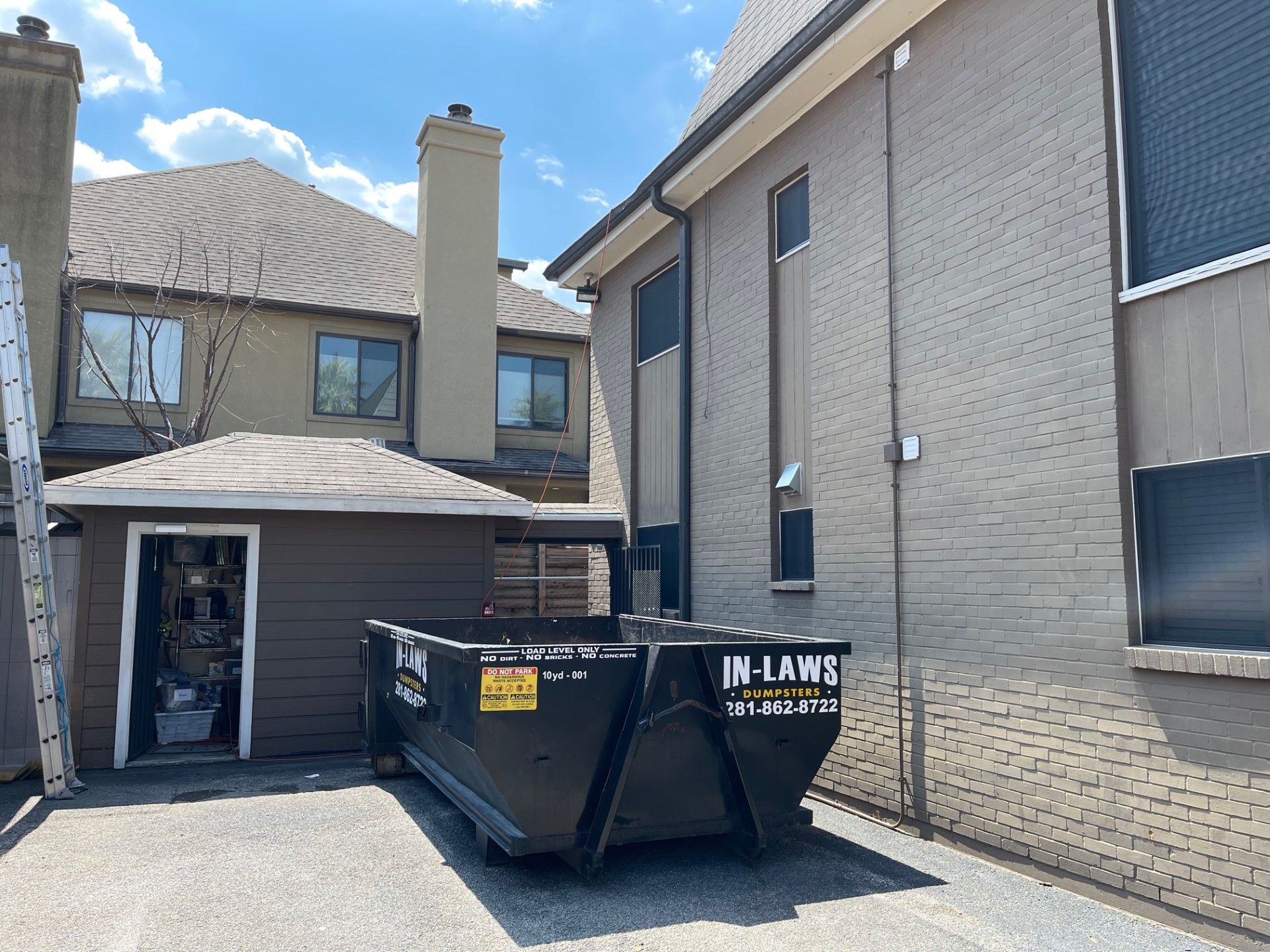
A 10-yard dumpster is a practical choice for smaller home projects. It holds roughly three to four pickup truck loads of material and has a compact footprint that works well in many Houston driveways.
This size is often a good fit for:
- Garage, attic, closet, or shed cleanouts
- Small bathroom renovations
- Single-room flooring removal
- Light landscaping work
- Small roofing projects
- Move-out cleanup for an apartment or rental home
Our 10-yard dumpsters measure approximately 12 feet long, 8 feet wide, and 3.3 feet high. Because the walls are lower, homeowners can often load lightweight debris over the side with less lifting.
When a 15-Yard Dumpster Is the Better Fit
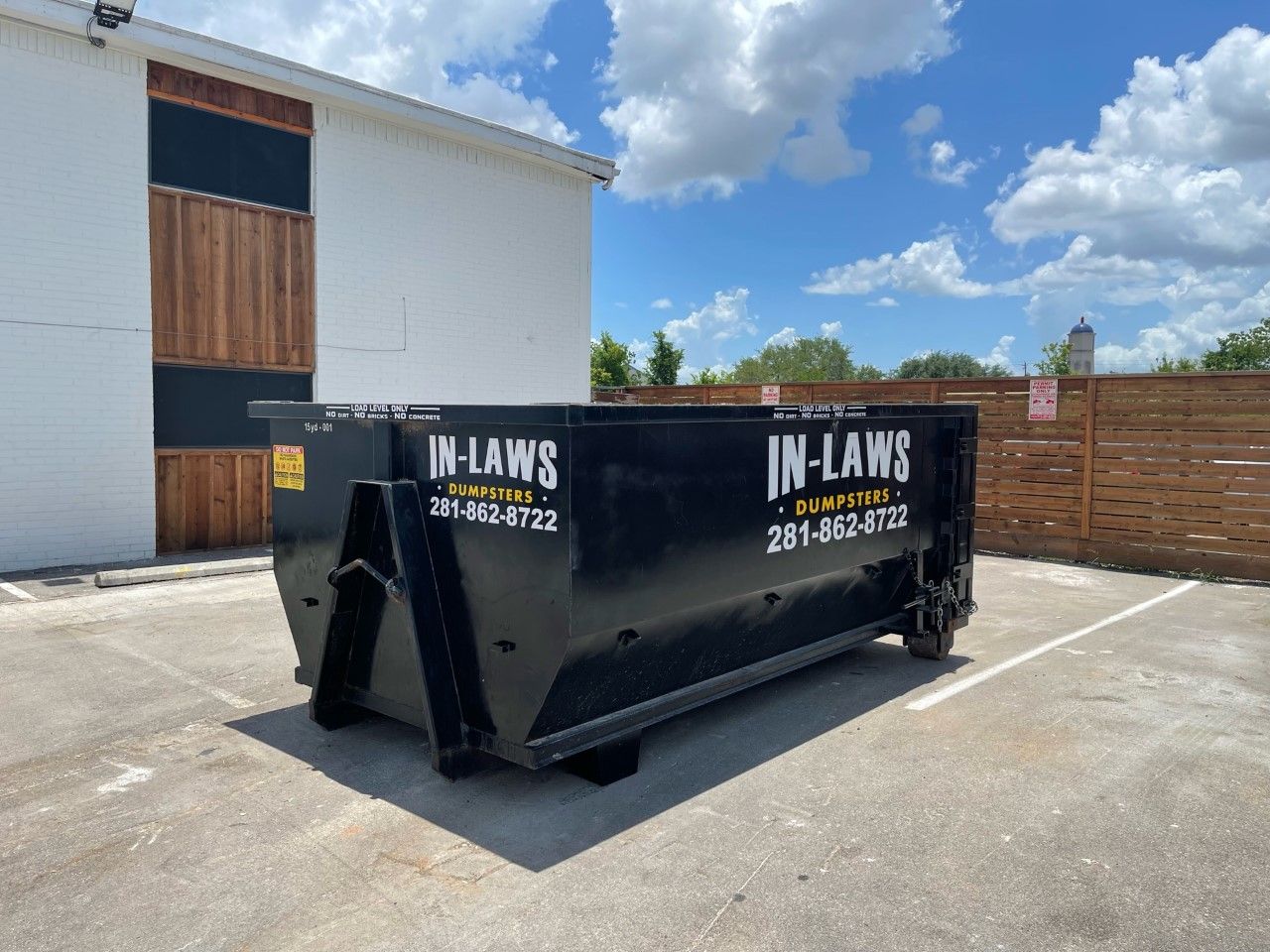
A 15-yard dumpster provides more room for medium-sized projects without taking over the entire driveway. It can hold about six pickup truck loads of debris and is a common choice for larger household cleanouts and renovation work.
- A 15-yard dumpster may be right for:
- Large garage or attic cleanouts
- Kitchen or bathroom remodels
- Estate cleanouts
- Moving and downsizing projects
- Roofing repairs
- Carpet and flooring removal from several rooms
- Medium landscaping projects
- Rental property turnovers
For homeowners across Houston, Deer Park, La Porte, Crosby, and surrounding communities, a 15-yard container often provides a comfortable middle ground. It has the space needed for furniture and remodeling debris while remaining manageable for residential placement.
When to Use a 20-Yard Dumpster
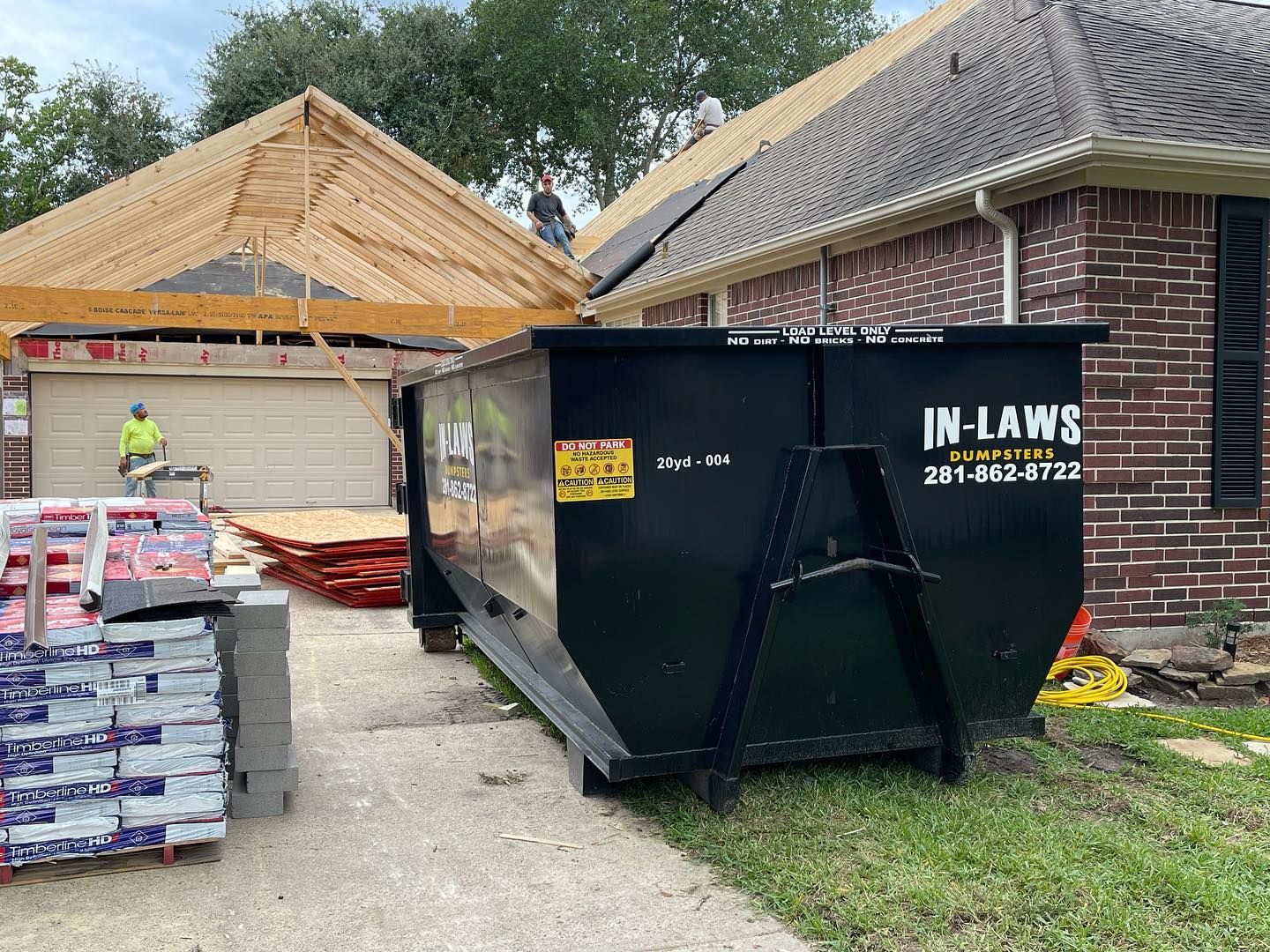
A 20-yard dumpster gives you more capacity for large residential projects. It holds about eight pickup truck loads of debris and works well when bulky materials, multiple rooms, or a major cleanup are involved.
This size is often used for:
- Whole-home cleanouts
- Major kitchen renovations
- Multi-room remodeling projects
- Large roofing jobs
- Estate cleanouts
- Extensive storm cleanup
- Deck, fence, or shed removal
- Large-scale yard and landscaping work
Our 20-yard dumpsters measure about 14 feet long, 8 feet wide, and 5.3 feet high. Many include a swinging rear door, which makes a major difference when you need to load heavy furniture, long boards, cabinets, or other difficult items.
Choosing the right size is not only about volume. It is also about the kind of debris you have. A dumpster may look spacious at first, but dense materials such as tile, shingles, dirt, brick, and concrete can add weight quickly. If you expect heavy material, discuss it before scheduling so you can select the right approach.
Prepare the Dumpster Area First
A clean, accessible loading area helps the entire project run more smoothly. Before delivery day, choose a flat, firm location that gives the truck enough room to place the dumpster safely.
For most residential jobs in Houston, the driveway is the best location. It keeps the dumpster close to the work area while avoiding street placement concerns. If the dumpster must sit on a public street, sidewalk, or right-of-way, check local requirements before delivery. Permit rules can vary by neighborhood and municipality.
Before the dumpster arrives, take these steps:
- Move vehicles out of the driveway and away from the delivery path
- Clear patio furniture, bicycles, trash cans, and other obstacles
- Check for low-hanging tree branches, roof overhangs, and power lines
- Make sure gates and driveways provide enough width for the truck
- Mark the preferred placement area with cones, tape, or another clear marker if you will not be home
- Keep the delivery area clear of soft ground, steep slopes, or sprinkler heads
If you want additional protection for your driveway, place sturdy boards beneath the dumpster placement area. This can help distribute weight and reduce direct contact with the surface.
The space around the dumpster matters too. Leave a safe path for carrying debris from the house, garage, or backyard. A clear walkway reduces tripping hazards and makes it easier to move items without squeezing through clutter.
Load Heavy Items First
The most important rule for how to load a dumpster rental properly is simple: put the heaviest items on the bottom.
Heavy materials create a stable foundation for the rest of the load. If you toss lightweight debris in first, you may end up with a loose, uneven pile that wastes valuable space. You may also have to move items around later, which adds unnecessary work.
Start with dense, heavy, or awkward materials such as:
- Wood lumber and framing scraps
- Drywall and plaster
- Tile and flooring
- Cabinets and countertops
- Old doors and windows
- Furniture frames
- Bagged household debris
- Shingles, when permitted for your selected dumpster and within weight limits
- Heavy yard debris, such as logs and thick branches
Place these materials flat whenever possible. Long boards should run lengthwise along the bottom of the dumpster rather than diagonally across it. Flat materials create a more stable base and leave room for smaller pieces around them.
If your dumpster has a swinging rear door, use it for heavy or bulky items. Walking a couch, cabinet, dresser, or stack of lumber through the door is safer than trying to lift it over the sidewall. It also gives you more control over where the item lands.
Do not pile all heavy debris on one side. Spread it across the bottom of the container. An evenly distributed load helps keep the dumpster stable and easier to transport at pickup.
Break Down Bulky Items
Bulky items can fill a dumpster faster than almost anything else. A single intact couch, bed frame, entertainment center, or stack of cardboard boxes can create empty pockets that smaller debris cannot easily reach.
Breaking down large items before loading is one of the easiest ways to maximize dumpster space.
Take apart furniture whenever it is safe and practical. Remove table legs, separate bed frames, flatten shelving units, and dismantle lightweight cabinets. If you are disposing of cardboard, break down every box before it goes into the dumpster.
For renovation projects, cut long boards into shorter pieces when needed. Stack them neatly rather than dropping them in at random. Remove doors from cabinets and take apart shelving systems that would otherwise trap air inside the load.
You do not need to turn every item into tiny pieces. The point is to eliminate large hollow shapes and awkward angles that prevent the dumpster from filling evenly.
For example, imagine loading a garage cleanout in Houston. If you toss in a full-size shelving unit, several unbroken boxes, a large dresser, and a few trash bags, the dumpster may appear full much sooner than expected. If you dismantle the shelving unit, flatten the boxes, remove dresser drawers, and place bags into the open spaces, you can often fit significantly more material into the same container.
Fill the Corners and Gaps
A dumpster fills from the bottom up, but many loads also develop unused space along the walls, in corners, and around bulky materials. Once the heavy base is in place, use smaller items to fill those gaps.
This is where bagged debris, boxes, loose household items, and smaller construction scraps become useful.
As you load, look for empty pockets between larger items. Fill them with materials such as:
- Flattened cardboard
- Small bags of household debris
- Trim pieces
- Broken-down furniture parts
- Light wood scraps
- Clothing and linens in bags
- Small non-hazardous household items
- Bundled branches
- Pieces of carpet or padding
Avoid simply throwing light materials on top and hoping they settle. Instead, place them where they help create a level, compact load.
This is especially helpful for residential dumpster rentals in Houston, where projects often combine different materials. A home cleanout may include bulky furniture, smaller boxes, old toys, clothing, yard debris, and renovation scraps all in one load. By placing the heavy materials first and using the smaller pieces to fill gaps, you can make better use of the available space.
Keep the Load Level
A level load is safer, more efficient, and easier to haul away. It also helps you avoid the most common pickup problem: debris sticking above the top rail.
As you work, step back every so often and look at the dumpster from several angles. You may notice that one side is building up faster than the other. If that happens, shift the next few items toward the lower side rather than adding to the tallest pile.
Keep these loading habits in mind:
- Distribute weight from side to side
- Avoid making one tall pile in the middle
- Fill low spots before adding more height
- Lay flat materials across the bottom or on top of a stable layer
- Keep loose debris contained in bags or boxes when possible
- Do not overload one end of the dumpster
A balanced load matters during transport. When the truck arrives for pickup, the driver needs to secure and haul the container safely. Materials piled above the rim may shift, fall out, or prevent the dumpster from being covered properly.
For that reason, every item should remain at or below the top edge of the dumpster. Do not stack materials over the sides, hang items out of the container, or create a mound that rises above the rim.
Even if the dumpster seems to have only a little overflow, it is not safe to haul in that condition. Keeping the load level from the beginning is much easier than trying to rearrange it at the end.
Know What Cannot Go Inside
Knowing how to load a dumpster rental safely also means knowing what must stay out of it. Certain materials are restricted because they create safety, environmental, transportation, or disposal problems.
At In-Laws Services, accepted materials generally include common household debris, furniture, non-hazardous construction debris, yard waste, wood, drywall, carpet, flooring, and other approved project waste. However, some items require separate disposal.
Do not place the following materials in your dumpster without confirming the proper disposal method:
- Gasoline, motor oil, fuel, and flammable liquids
- Chemicals, solvents, pesticides, and hazardous cleaners
- Wet paint or non-empty paint cans
- Propane tanks
- Car batteries and lead-acid batteries
- Medical waste, needles, or medications
- Televisions and electronic waste
- Refrigerators, freezers, and other appliances containing refrigerant
- Asbestos or suspected asbestos-containing materials
- Tires
- Radioactive materials
- Large amounts of dirt, brick, concrete, or other dense masonry materials
These materials can make a load unsafe or unacceptable at the disposal facility. When in doubt, ask before loading the item. It is much easier to set a questionable item aside than to discover it after the dumpster is full.
Mattresses may also involve additional disposal fees because they are difficult for landfills to process. If you plan to dispose of mattresses, let us know ahead of time so you understand the requirements.
Be Careful With Heavy Materials
Volume is only one part of a dumpster rental. Weight matters just as much.
Light materials such as cardboard, furniture, clothing, brush, and household clutter can take up a lot of room without adding much weight. Materials such as shingles, tile, brick, dirt, concrete, wet carpet, and drywall can become heavy very quickly.
Each In-Laws Services dumpster rental includes a designated weight allowance based on the container size and rental package. A 10-yard dumpster is generally suited for smaller projects, while 15-yard and 20-yard dumpsters include more capacity for larger residential loads.
Before you load heavy debris, consider the material itself. A full dumpster of old furniture may weigh less than a partially filled dumpster of roofing shingles or broken tile.
If your project includes especially dense material, do not assume that a larger dumpster automatically means you can fill it with anything. Some materials may require a different disposal plan because of transport limits and landfill regulations.
For Houston homeowners removing old flooring, roofing, brickwork, or landscaping materials, this is one of the most important details to address before the project begins. Tell us what you are removing, and we can help you plan for the type of debris involved.
Use Safe Lifting Practices
A properly loaded dumpster is not worth an injury. Home cleanouts and renovation projects often involve lifting, twisting, carrying, and repetitive motion, especially when the work stretches over several days.
Work steadily instead of rushing. Wear gloves to protect your hands from splinters, sharp edges, nails, and broken materials. Closed-toe shoes or work boots offer better footing and help protect your feet from dropped debris.
When lifting:
- Bend at the knees rather than at the waist
- Keep heavy items close to your body
- Avoid twisting while carrying a load
- Ask for help with furniture, appliances, and oversized materials
- Use a dolly, hand truck, or wheelbarrow when appropriate
- Take breaks when fatigue starts to affect your balance or judgment
Never climb into the dumpster to rearrange debris or compact the load. The sides are high, the footing can be unstable, and sharp or shifting materials can create a serious hazard.
If you need to load heavy furniture or renovation debris, use the rear door when available. It allows you to walk materials inside instead of lifting them above shoulder height. Once the item is inside, place it securely and keep the loading area clear.
Keep children and pets away from the dumpster and the debris path. A residential project can become busy quickly, especially when family members, contractors, delivery trucks, tools, and materials are moving around the property.
Plan for Houston Weather
Houston weather can change fast. A sunny morning can become a heavy afternoon storm, and wind can turn lightweight debris into a mess across the driveway or yard.
Weather affects both safety and loading efficiency. Rain can add moisture weight to certain materials, especially carpet, cardboard, fabric, drywall, and yard debris. Wet materials can also become slippery and harder to carry.
If rain is expected, avoid leaving loose debris near the dumpster where it can blow away or become soaked. Bag smaller materials when appropriate, break down boxes only when you are ready to load them, and cover items that should stay dry before disposal.
Strong wind is another reason to keep the load neat. Loose plastic, paper, insulation, and lightweight packing materials can escape the dumpster if they are not contained.
During storm cleanup in Houston and the surrounding area, work carefully around downed branches, damaged fencing, wet debris, and unstable materials. Do not load materials that may be tangled in utility lines or that could contain hazardous debris. If a storm has created an unusual cleanup situation, identify questionable items before placing them in the dumpster.
Avoid These Common Loading Mistakes
The best way to learn how to load a dumpster rental is to avoid the mistakes that reduce space and create problems at pickup.
Loading Light Items First
Starting with boxes, bags, and lightweight clutter may seem convenient, but it usually leads to wasted space. Heavy materials should go in first so they create a stable base.
Tossing Items in Randomly
Random loading creates air pockets, uneven piles, and a load that looks full before it truly is. Take a moment to place items intentionally.
Leaving Furniture Intact
Large furniture pieces often contain empty space. Disassemble what you can, remove drawers, and stack parts flat whenever possible.
Overfilling Above the Rim
A dumpster cannot be safely hauled when debris rises above the top edge. Keep every item inside the container walls.
Ignoring Weight Limits
Tile, shingles, drywall, brick, dirt, and similar materials can add up quickly. Consider the weight of your debris before loading dense materials.
Mixing in Prohibited Items
Paint, chemicals, fuel, batteries, propane tanks, electronics, and refrigerant appliances require separate disposal. Keep them out of the dumpster.
Blocking the Dumpster Before Pickup
Do not park vehicles in front of the dumpster or pile materials around it. The truck needs clear access when it is time for removal.
Prepare for Pickup
The final day of your rental should be simple. A quick check before pickup helps make sure the dumpster can be removed safely and without delay.
Walk around the container and look for anything leaning over the sides, sticking above the rim, or sitting in front of the dumpster. Move loose debris away from the loading area and make sure the rear door is closed and secured if your container has one.
Before pickup, confirm that:
- All debris is below the top rail
- No prohibited materials are inside
- The dumpster door is fully closed
- Cars are moved out of the access path
- Gates are unlocked if necessary
- No equipment, tools, or debris block the container
- The driveway and street access are clear for the truck
If you finish your project early, contact us to discuss pickup options. If the work takes longer than expected, rental extensions may be available. It is always better to communicate before the scheduled pickup date than to let timing become an issue.
How to Load a Dumpster Rental: Frequently Asked Questions
How should I load a dumpster rental to fit the most debris?
At In-Laws Services, we recommend loading heavy, flat materials first and placing them evenly across the bottom. Break down furniture and boxes, then use smaller items and bagged debris to fill gaps along the sides and corners. Keep the load level and below the top edge of the dumpster.
Should I put heavy items on the bottom of a dumpster?
Yes. Heavy items should go on the bottom of the dumpster because they create a stable base for lighter materials. Place dense debris evenly across the container instead of loading one side with all the weight.
Can I put furniture in a dumpster rental?
Yes, common household furniture such as couches, chairs, tables, bed frames, dressers, and shelving can usually go into an In-Laws Services dumpster. We recommend taking apart furniture when possible to save space and make loading easier.
Can I fill a dumpster above the top rail?
No. All debris must stay at or below the top rail of the dumpster. Overfilled dumpsters may not be safe to transport because materials can shift or fall out during pickup.
What items should not go in a dumpster rental?
Do not place hazardous chemicals, gasoline, motor oil, wet paint, propane tanks, batteries, medical waste, televisions, electronics, refrigerators, freezers, tires, asbestos, dirt, brick, or concrete in a standard dumpster rental. Contact In-Laws Services before loading any item you are unsure about.
How do I load a dumpster rental safely?
Wear gloves and closed-toe shoes, lift with your knees, use help or equipment for bulky items, and keep the walkway clear. Use the rear door for heavy materials when available, distribute weight evenly, and never climb inside the dumpster to rearrange debris.
Make Every Load Count
Knowing how to load a dumpster rental properly can make a major difference in the way your Houston home project feels. Instead of dealing with cluttered work areas, repeated dump runs, and a container that fills too soon, you can keep debris organized from the first day through final pickup.
Start with the right size. Prepare a clear delivery area. Load heavy materials first, break down bulky items, fill empty spaces with smaller debris, and keep the entire load below the rim. Just as important, separate out prohibited materials and give yourself enough room for safe lifting and pickup access.
At In-Laws Services, we serve homeowners throughout Houston, Channelview, Crosby, Highlands, Baytown, Sheldon, Jacinto City, Galena Park, Pasadena, Deer Park, La Porte, South Houston, Humble, Atascocita, Huffman, and nearby communities. Our 10-yard, 15-yard, and 20-yard dumpsters give residential customers practical options for everything from a focused weekend cleanout to a major renovation.
A dumpster is there to make the mess easier to manage. Load it with a plan, and it can help you move through the project with a cleaner driveway, a safer work area, and far less stress.