
Outbuilding Cleanout Made Easy With Dumpster Rentals in Houston, TX
Your Complete Guide to Outbuilding Cleanouts and Dumpster Rentals in Houston, TX
An outbuilding can be one of the most useful spaces on a property—until years of tools, boxes, broken equipment, old furniture, and forgotten materials make it difficult to walk through the door. Whether you call it a shed, detached garage, workshop, barn, storage building, or backyard utility room, a full cleanout can quickly become larger than a few trash bags and a pickup truck can handle.
At In-Laws Services, we help homeowners, landlords, contractors, and business owners throughout Houston, TX, take on the mess without turning the process into an all-weekend hauling project. A roll-off dumpster keeps debris in one central place, gives you room to work at your own pace, and eliminates the need to load up and drive back and forth to a landfill.
A successful outbuilding cleanout does more than remove clutter. It can make a neglected space usable again, reveal needed repairs, improve access to stored belongings, and help you prepare for a renovation, move, sale, or new project. With a little planning and the right dumpster rental, even an overfilled building can become a clean, functional part of your Houston property again.
Why Outbuildings Become So Hard to Clean
Most outbuildings do not become cluttered overnight. The process usually starts small. A homeowner places a few extra boxes in the shed after moving. An old lawn mower gets pushed into the corner. Broken patio furniture stays behind because there is no immediate place to take it. Before long, the building becomes the default destination for anything that does not have a place inside the house.
Houston weather can make the problem worse. Heat, humidity, heavy rain, and storm seasons can damage cardboard boxes, wood items, old fabrics, and stored equipment. A shed that once held neatly organized tools may eventually contain rusted metal, water-damaged furniture, broken storage bins, branches, and debris that has piled up for years.
Detached garages and workshops often face a similar challenge. They may begin as useful spaces for vehicles, tools, hobbies, or projects. Over time, they become storage areas for old appliances, scrap materials, unused household items, and leftovers from previous renovations. When there is no easy disposal plan, people often keep putting off the cleanout.
That is where a dumpster can make a major difference. Instead of trying to decide what will fit in a curbside bin or how many pickup loads you can make, you can sort through the building and place acceptable debris directly into a nearby roll-off container.
What Counts as an Outbuilding Cleanout?
An outbuilding cleanout can look different from one Houston property to another. For some homeowners, it means clearing a small backyard storage shed. For others, it may involve an oversized detached garage, an old barn, a workshop, a commercial storage structure, or a rental-property utility building.
Common outbuilding cleanout projects include:
- Emptying an overstuffed storage shed.
- Clearing out a detached garage before a renovation.
- Removing old furniture, boxes, and household overflow.
- Cleaning up storm-damaged belongings and debris.
- Preparing a workshop for new equipment or a new use.
- Sorting through inherited property after an estate transition.
- Removing old tools, shelving, cabinets, and fixtures.
- Cleaning out a rental property’s storage building.
- Clearing yard debris, branches, and landscaping waste around a shed.
- Removing nonhazardous construction debris from a shed or garage remodel.
Every project creates a different mix of materials. Some outbuilding cleanouts involve mostly light household clutter, while others include bulky items, lumber, old shelving, damaged drywall, yard debris, or heavy equipment parts. The right dumpster size depends on the volume and type of debris you expect to remove.
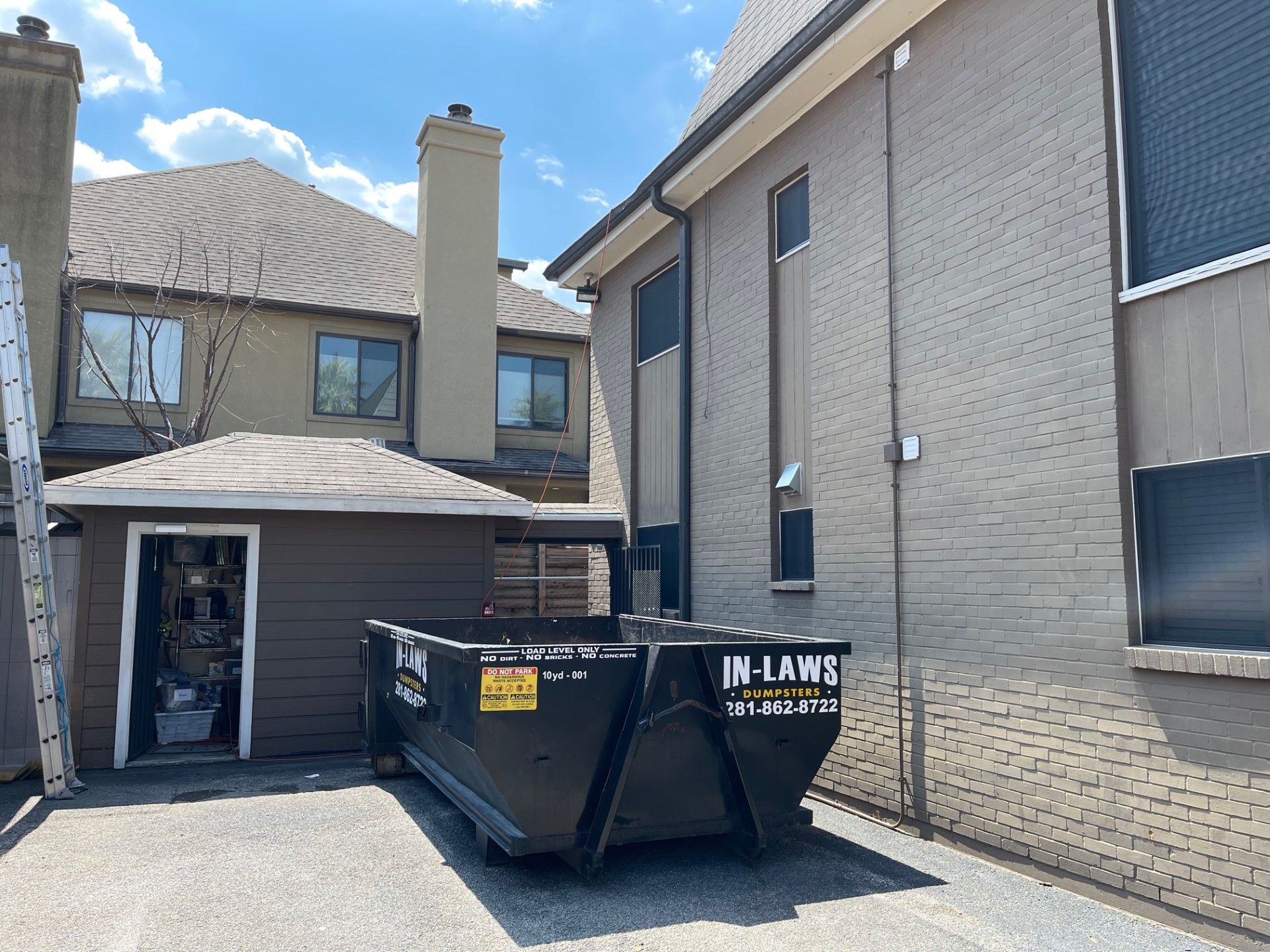
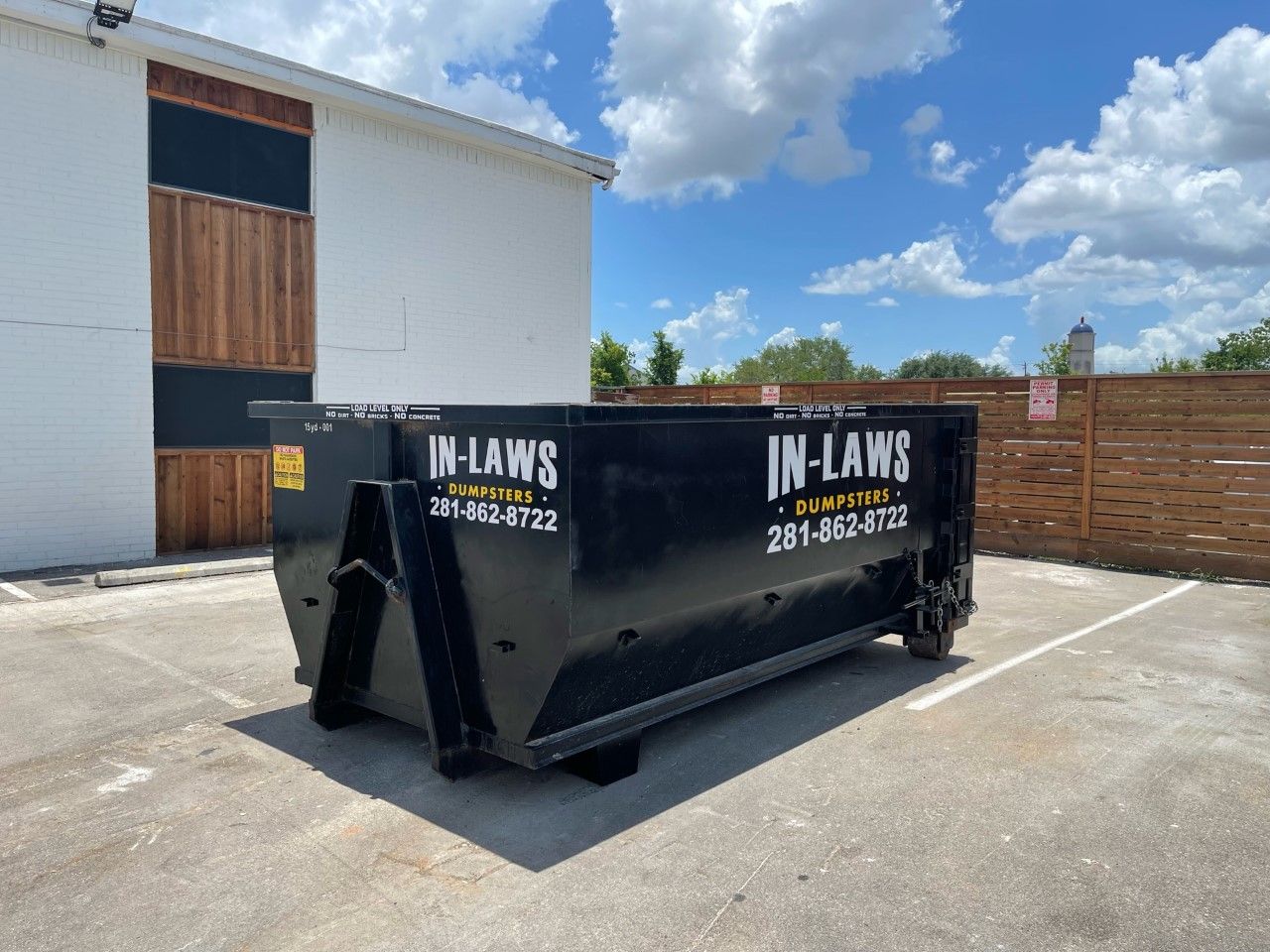
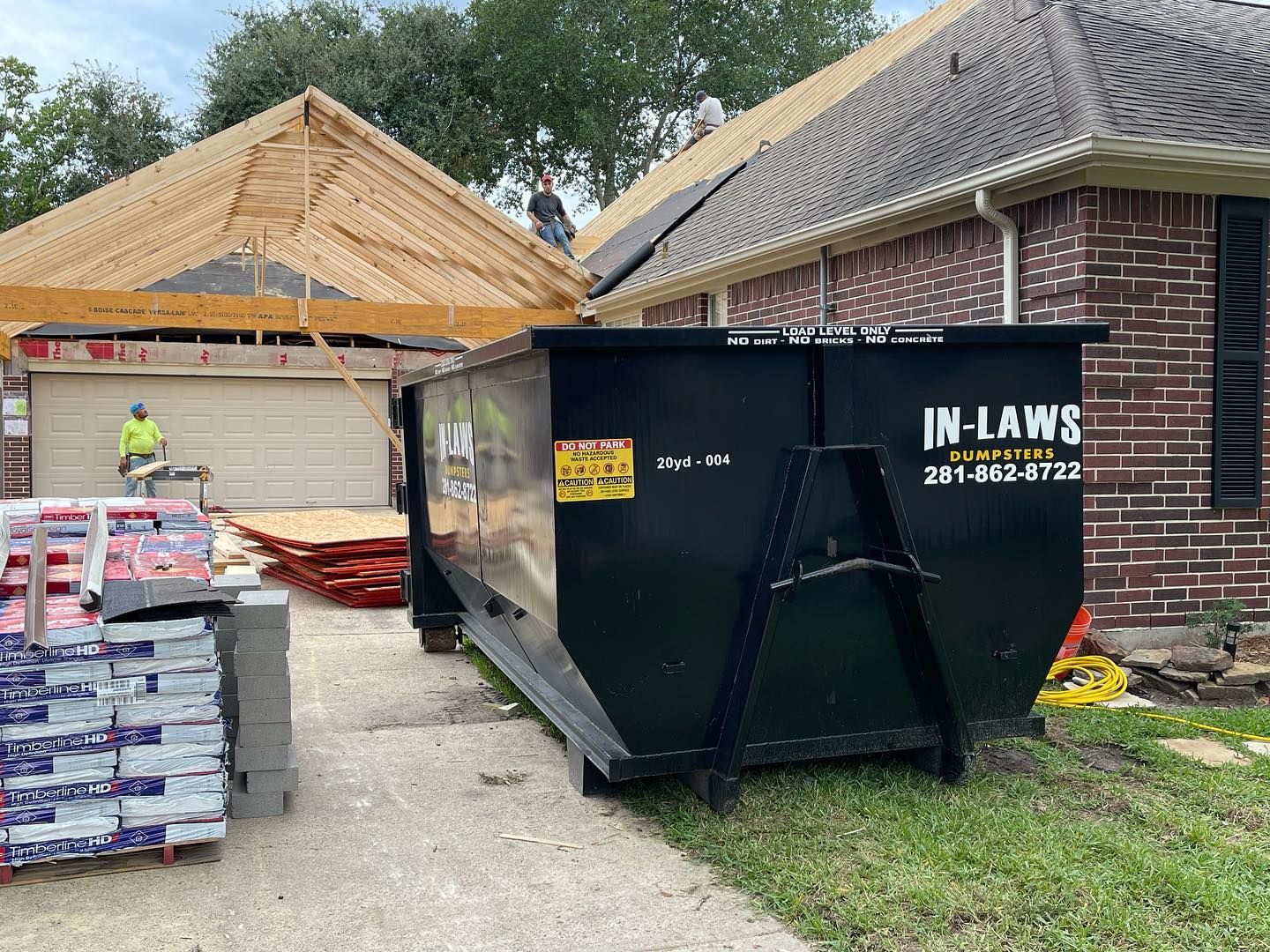
At In-Laws Services, we provide 10-yard, 15-yard, and 20-yard roll-off dumpsters for Houston-area projects. These sizes give many property owners enough capacity for a focused shed cleanout, a larger detached-garage cleanout, or a multi-day property cleanup without taking on unnecessary trips to a disposal facility.
Why a Dumpster Makes an Outbuilding Cleanout Easier
A cleanout can feel overwhelming because every item requires a decision. Keep it, donate it, recycle it, sell it, repair it, or throw it away. Those choices take time. When you also have to figure out how to transport the items away, the project often stalls before it really begins.
A dumpster rental simplifies the disposal side of the job. Once the container is delivered, you have a designated place for the debris you are ready to remove. That makes it easier to keep moving as you sort through the building.
Keep the Work Area Clear
During an outbuilding cleanout, it is tempting to make piles around the yard or driveway. That approach may work for a few items, but it can quickly create a second mess outside. Rain can damage items you meant to donate, wind can scatter loose debris, and piles can make it harder to move safely around the property.
A dumpster gives you one contained disposal area. You can carry out unwanted items, load them into the container, and keep your yard, driveway, and work path clearer throughout the project.
Avoid Multiple Landfill Trips
A pickup truck is useful, but it has limits. Large, awkward, dirty, or damaged items can be difficult to load, secure, and unload. One outbuilding cleanout may require several trips, especially when you have old furniture, shelving, boxes, lumber, or yard waste to remove.
Multiple disposal trips take time, use fuel, and interrupt the workday. They can also make it difficult to finish the job before a Houston afternoon thunderstorm rolls in. A roll-off dumpster allows you to load debris where you are working, then let us handle pickup when the rental period is complete.
Work at a Practical Pace
Not every cleanout needs to happen in one day. A building that has been packed for years may need a slower, more thoughtful approach. You may find paperwork to review, family belongings to set aside, usable tools to organize, or materials that need separate disposal.
With a dumpster on site, you do not have to rush every decision because your truck bed is full. You can work through one wall, one shelf, or one category at a time. In-Laws Services typically offers rental periods of three or seven days, with extension options available when a project needs more time.
Make Room for Repairs and Improvements
Once you remove the clutter, you may notice that the outbuilding needs attention. You might find a damaged wall, worn flooring, roof leaks, pest damage, old wiring, or shelves that no longer serve the space. Clearing the building first gives you the room to assess what comes next.
For example, a Houston homeowner may begin with the goal of cleaning out a backyard shed. After removing unused lawn equipment, broken storage totes, and old wood, they may decide to repair the floor, add better shelving, and turn the shed into organized storage for gardening supplies. The dumpster supports the first step by making disposal simple while the space is being reclaimed.
Plan Before You Start the Cleanout
The best outbuilding cleanout projects begin with a plan. You do not need a complicated system, but a few basic decisions can make the work safer, faster, and less stressful.
Start by walking around the exterior of the building. Look for obstacles that could affect access, such as low tree limbs, gates, soft ground, parked vehicles, overhead wires, or narrow driveways. Think about where a dumpster could sit without blocking everyday access to the home, garage, or street.
Then take a quick look inside. You do not need to sort every item before ordering a dumpster, but you should get a general sense of the volume. Is the building half full of boxes and lightweight household clutter? Is it packed with old furniture and shelving? Are there piles of lumber, construction debris, branches, or other bulky materials?
You should also consider how you will move items out of the building. Clear a path from the doorway to the dumpster location. Wear sturdy shoes and gloves, and use help or moving equipment for large, heavy, or unstable items. Do not climb on loose piles or try to lift bulky materials alone.
Choose the Right Dumpster Size
Choosing the right dumpster size is one of the most important parts of planning an outbuilding cleanout. Too little space can leave you with debris that does not fit. A container that is far larger than your project may not be the best use of space or budget.
In-Laws Services offers several dumpster sizes for Houston cleanouts, renovations, and property projects. Our team can help you consider the type of debris, the size of the building, and the available placement area before you schedule delivery.
When a 10-Yard Dumpster Works Well
A 10-yard dumpster can be a practical choice for a small shed cleanout, a compact storage building, or a limited garage decluttering project. It is often a good fit when you are removing boxes, old household items, small furniture, yard debris, shelving, and general clutter without taking on a full-scale demolition project.
This size can hold roughly the equivalent of up to four pickup truck loads, depending on the material. It works well for homeowners who have a defined cleanup list and want to keep the project contained.
A 10-yard dumpster may be especially helpful when the outbuilding is not full from floor to ceiling, but the debris is too much for normal household trash collection. It can also work well when you are clearing one area at a time, such as a tool shed, gardening shed, or small detached storage space.
When a 15-Yard Dumpster Is the Better Fit
A 15-yard dumpster gives you more room for medium-size projects. It is often a strong choice for a larger shed, a cluttered detached garage, a workshop cleanout, or a property cleanup that includes both indoor contents and outdoor debris.
This option can be useful when the building contains a mix of bulky items and general clutter. Old furniture, cabinets, shelving, wood scraps, boxes, outdoor equipment, and construction-related debris can fill space faster than many people expect. A 15-yard dumpster gives you breathing room without moving up to the largest option.
If your outbuilding has served as the catch-all storage area for several years, a 15-yard container may help you avoid having to stop halfway through the job and reconsider your disposal plan.
When a 20-Yard Dumpster Makes Sense
A 20-yard dumpster is often the right choice for a large outbuilding cleanout, a heavily packed detached garage, a barn cleanup, a workshop renovation, or a project that combines cleanup and demolition debris. It can hold up to approximately six pickup truck loads of material, depending on what you are throwing away.
This size offers useful capacity for projects where you expect to remove large furniture, significant amounts of wood, flooring, cabinets, yard debris, or materials left from past renovations. It can also be a good fit for a property owner who wants to clean the building and the surrounding area at the same time.
For instance, if you are clearing a detached garage in Houston before converting it into a gym, studio, office, or workshop, a 20-yard dumpster gives you room for old storage items, damaged shelves, unused workbenches, carpet, wall materials, and other debris that may come out as the project progresses.
Sort Items Before They Reach the Dumpster
A dumpster gives you a convenient place for accepted debris, but sorting still matters. The goal is not to overcomplicate the cleanout. It is to make sure valuable, reusable, recyclable, and prohibited materials do not get mixed into the general disposal pile.
As you work through the building, create a simple decision process. Keep useful items that have a clear purpose. Set aside donations that are clean, functional, and likely to be accepted. Place items that are broken, damaged, outdated, unsafe, or no longer needed into the dumpster if they are allowed.
It helps to sort by category rather than trying to organize every item individually. You might start with cardboard and loose trash, then move to furniture, tools, lawn equipment, building materials, and storage containers. This approach makes the space feel more manageable and helps you see progress quickly.
Be realistic about what you plan to keep. A common cleanout mistake is moving every questionable item from one corner of the property to another. If something has been unused for years, is broken beyond practical repair, or has no clear purpose, it may be time to let it go.
Know What Should Not Go in a Dumpster
Before loading a dumpster, ask about restricted or prohibited materials. Standard roll-off dumpsters are designed for many types of solid waste, household clutter, construction debris, and yard waste, but they are not appropriate for everything.
In-Laws Services does not allow hazardous materials, flammable liquids, or certain restricted waste in its dumpsters. These items require special handling because they can create safety risks, damage equipment, or violate disposal regulations.
Items that may need separate disposal include:
- Paint, stains, and solvents.
- Gasoline, diesel fuel, oil, and other flammable liquids.
- Propane tanks and pressurized cylinders.
- Pesticides, herbicides, and chemicals.
- Batteries.
- Tires.
- Electronics.
- Refrigerants and appliances that contain them.
- Medical waste.
- Asbestos-containing materials or other regulated materials.
If you find unknown containers during an outbuilding cleanout, do not pour them out, mix them together, or place them in the dumpster. Keep the labels visible if possible and contact the appropriate local disposal resource for guidance. Houston and Harris County may have disposal programs or event-based options for certain household hazardous materials, but availability and requirements can change.
When you have questions about a specific item, check before loading it. A quick conversation can help you avoid delays, extra handling, or unsafe disposal.
Load Your Dumpster Safely and Efficiently
Once the dumpster arrives, thoughtful loading can help you use the available space well. Begin with flat, heavy, or bulky materials whenever possible. Place items like boards, shelves, broken-down furniture, and flattened boxes along the bottom and sides.
Break down items that can be safely dismantled. Remove table legs, disassemble shelving, flatten cardboard, and stack materials rather than tossing them in loosely. This can free up a surprising amount of room.
Use the rear door when loading large or heavy items. In-Laws Services dumpsters are equipped with a rear door that swings open for easier access. Instead of lifting a bulky item over the sidewall, you can walk or wheel it into the dumpster when it is safe to do so.
Keep debris level with or below the top edge of the dumpster. Overfilled containers can create transportation hazards and may require material to be removed before pickup. Avoid placing loose items where they can blow away, and do not allow children or pets to climb around the container.
Weight matters, too. Concrete, dirt, brick, roofing materials, and dense metal can add weight quickly even if the dumpster does not appear full. Tell us about heavy materials before your rental so we can help you choose the right approach for the job.
Dumpster Placement for Houston Properties
The right dumpster location should be accessible for delivery, convenient for loading, and practical for the rest of your household or worksite. Many customers place a dumpster on a driveway, hard-packed surface, or another stable area close to the outbuilding.
Before delivery, move vehicles, trailers, outdoor furniture, or equipment that could block access. Make sure the delivery route has sufficient clearance. Houston properties can vary widely, from compact city lots to larger suburban yards and commercial spaces, so it helps to think through the route before the truck arrives.
If you want to protect a driveway surface, consider placing boards or plywood beneath the dumpster location when appropriate. This can help distribute contact points, though it is not a guarantee against surface marks or damage. Discuss your placement concerns with us before delivery so we can work toward the safest, most accessible option.
Placement on private property generally differs from placement on a public street or right-of-way. In Houston, a permit may be required when a dumpster will sit on public property, while placement on your own property may not require the same approval. Always verify the requirements that apply to your specific location before scheduling the rental.
A Simple Step-by-Step Outbuilding Cleanout Process
An outbuilding cleanout feels easier when you break it into stages. You do not have to make every decision at once or empty the whole building in a single afternoon.
Start With Access and Safety
Open doors and windows if conditions allow, but watch for pests, mold, damaged flooring, sharp objects, and unstable stacks. Bring in basic supplies such as gloves, work boots, contractor bags, a broom, a flashlight, and moving equipment for larger items.
Create a clear path from the entrance to the dumpster. Remove loose trash and obvious debris first so you can move around safely.
Handle the Easy Decisions First
Start with items that are clearly trash. Broken plastic bins, damaged cardboard, ruined furniture, old packaging, unusable materials, and debris can go first. This immediately opens up space and helps you see what you actually have.
Avoid getting stuck on sentimental or uncertain items at the beginning. Place those in a separate review area and return to them later. The early goal is momentum.
Work One Zone at a Time
Divide the building into manageable zones. You might start with the floor near the entrance, then move to one wall, a workbench, shelving unit, or storage loft. Finish each section before starting another.
This approach keeps the cleanout from feeling chaotic. It also prevents you from moving the same items repeatedly as you work around the building.
Separate Keep, Donate, and Dispose Items
As you uncover belongings, give each one a destination. Useful items go to a keep area. Functional items you are ready to pass along go to a donation area. Acceptable debris goes directly into the dumpster.
Try to keep the donation pile protected from weather, especially during Houston’s hot and rainy months. If you cannot transport donations quickly, do not let them sit outside long enough to become damaged or unusable.
Sweep and Inspect the Empty Space
Once the building is empty, sweep the floor and inspect the walls, roof, shelving, doors, and foundation. Look for moisture damage, signs of pests, loose fasteners, damaged electrical components, or areas that need repair.
This final inspection often becomes the most valuable part of the project. You can now decide how you want the building to work for you going forward.
Outbuilding Cleanouts Before a Move or Sale
A clean, usable outbuilding can make a property feel more organized and more valuable to a potential buyer or renter. When a shed or detached garage is packed with clutter, it is difficult for others to see its actual size or potential.
If you are preparing a Houston home for sale, a dumpster rental can help you clear out leftover materials, unwanted furniture, old storage items, and yard debris before photos, showings, or inspections. The same idea applies to rental properties. A clean storage building gives the next tenant a functional space instead of a cleanup task.
Moving is another common reason for an outbuilding cleanout. People often discover that they have been storing things they do not want to bring to the next home. A dumpster allows you to sort through those items before moving day rather than packing and transporting clutter that will remain unused.
Cleanouts After Storms and Water Damage
Houston residents know that severe weather can leave behind a difficult cleanup. Heavy rain, flooding, wind, and fallen branches can affect sheds, garages, fences, and storage buildings. Water-damaged cardboard, fabric, particleboard furniture, insulation, and wood materials may need to be removed quickly to make room for drying, repairs, and inspection.
A dumpster can provide a central place for nonhazardous storm debris and damaged materials during the cleanup process. However, always take care around electrical hazards, mold, contaminated floodwater, structural damage, and unknown chemicals. Do not enter an unsafe building or attempt to remove materials that may require specialized handling.
If your outbuilding sustained significant damage, document conditions for insurance purposes before throwing away items. Take photographs, make a list of damaged belongings, and follow any instructions from your insurer before disposal.
Reclaim the Space After the Cleanout
The best part of an outbuilding cleanout often comes after the dumpster is picked up. You are left with room to use the building intentionally again.
A cleared shed can become organized storage for landscaping equipment, seasonal décor, bicycles, or outdoor tools. A detached garage can become a workshop, home gym, hobby room, or secure space for vehicles. An unused storage building can become a gardening station, craft area, small office, or practical utility space.
Before moving anything back in, decide what the space needs to do. Then set up storage around that purpose. Wall-mounted racks, labeled bins, shelving, hooks, and clear zones can help keep the clutter from returning.
A simple rule works well: if an item does not have a designated place, it does not stay in the building. That rule can prevent the fresh start from slowly turning back into another overloaded storage space.
Outbuilding Cleanout Questions? Let’s Clear Things Up
What size dumpster should I rent for an outbuilding cleanout in Houston, TX?
For a small shed or limited cleanup, a 10-yard dumpster may be enough. A 15-yard dumpster often works well for a larger shed, detached garage, or workshop with bulky clutter. A 20-yard dumpster is usually better for heavily packed outbuildings, large garage cleanouts, renovation debris, or projects that include both indoor and yard cleanup. At In-Laws Services, we help customers choose based on the building size, debris type, and estimated volume.
Can I put old furniture and shelving from my shed in a dumpster?
Yes, you can generally place common household furniture, wooden shelving, storage bins, boxes, and nonhazardous debris from an outbuilding in our dumpsters. Break down items when possible to use the space more efficiently. If you are unsure about a particular item, contact In-Laws Services before loading it.
What items cannot go in a dumpster during an outbuilding cleanout?
Do not place hazardous materials, flammable liquids, chemicals, batteries, tires, electronics, propane tanks, medical waste, or regulated materials in an In-Laws Services dumpster. Appliances and materials containing refrigerants may also require separate handling. If you find unknown containers in a shed or garage, keep them out of the dumpster and ask about proper disposal options.
How long can I keep a dumpster for a Houston outbuilding cleanout?
In-Laws Services typically offers three-day and seven-day rental periods for dumpster rentals. If your cleanout needs additional time, extensions may be available. Planning your cleanup in zones can help you make steady progress during the rental period without rushing the job.
Do I need a permit for a dumpster at my Houston property?
A permit may be needed if the dumpster will be placed on a public street, sidewalk, or other public property in Houston. A dumpster placed on private property may have different requirements. We recommend confirming the rules for your specific address and placement location before delivery.
Where should I place a dumpster for a shed or detached-garage cleanout?
Place the dumpster on a stable, accessible surface that allows a clear path from the outbuilding to the container. Driveways and hard-packed areas are common choices. Move vehicles and obstacles before delivery, check for overhead clearance, and avoid blocking entrances or access routes. At In-Laws Services, we work with you to identify a placement location that is safe and practical when conditions allow.
Make Your Houston Cleanout More Manageable
A packed shed, garage, barn, or workshop does not have to stay that way. The hardest part is often getting started, but a dumpster creates a straightforward system for moving unwanted material out of the building and off the property.
At In-Laws Services, we provide roll-off dumpster rentals for residential and commercial projects throughout Houston, TX, and surrounding communities. Our available 10-yard, 15-yard, and 20-yard dumpsters can support everything from a small shed cleanup to a major detached-garage cleanout, renovation, or property-wide decluttering project.
With a clear plan, safe loading practices, and the right amount of disposal space, you can turn an overlooked outbuilding into a clean, useful space again.