
How to Plan a Commercial Cleanout in Houston
Commercial Cleanout Planning for Houston Businesses and Property Managers
A commercial cleanout rarely begins with a neat checklist. More often, it starts with an unexpected lease ending, an office renovation that moved faster than planned, a storage room that has quietly filled up for years, or a tenant who leaves behind far more than a few boxes.
At In-Laws Services, we work with Houston-area business owners, property managers, contractors, and maintenance teams who need a practical way to clear out unwanted materials without letting debris take over the property. A well-planned commercial cleanout keeps the work moving, helps crews stay organized, and gives everyone involved a clear place to put the mess as it comes out.
Whether you are clearing an office in Downtown Houston, preparing a retail suite in Midtown, updating a medical office near the Texas Medical Center, or handling a turnover in the Energy Corridor, the same principle applies: plan the cleanup before the first chair, cabinet, or bag of trash reaches the curb.
A temporary roll-off dumpster can make that process much easier. It gives your team one central place to load approved debris while the cleanout, repairs, and turnover move forward. This guide explains how to plan a commercial cleanout in Houston, choose the right dumpster approach, manage common materials, and keep a property ready for whatever comes next.
Start With a Clear Picture of the Project
Before anyone starts hauling desks into the hallway or pulling old carpet from an office suite, take a step back and assess the job. Commercial cleanouts can look simple from the outside, but every property has its own access issues, deadlines, debris types, and building rules.
A small office move-out may involve a few desks, chairs, filing cabinets, and bags of general trash. A larger corporate space may contain outdated cubicles, conference room furniture, storage shelving, breakroom equipment, carpet, damaged fixtures, and years of forgotten supplies.
The more clearly you understand the job before scheduling a dumpster, the easier it becomes to keep the work on track.
Walk the Entire Property First
Start with a complete walkthrough of the commercial space. Do not stop at the front office or the main work area. Check conference rooms, storage closets, breakrooms, supply areas, restrooms, loading spaces, utility rooms, and any back-of-house areas that may have collected materials over time.
Look for items that will require extra planning, such as large furniture, heavy shelving, appliances, electronic equipment, flooring, drywall, or construction debris. You should also note whether the cleanup will happen all at once or in stages.
A property manager preparing a suite for a new tenant may need to clear furniture and trash first, then remove carpet, repaint walls, update fixtures, and bring in cleaners. A contractor handling a commercial renovation may create debris throughout several days of work. Those projects need different schedules, even if both involve a dumpster.
Take photos as you walk through the property. They help you document the condition of the space, share details with owners or contractors, and estimate what will need to be removed.
Separate the Work Into Categories
A commercial cleanout gets easier when you separate the materials into basic categories before loading begins.
Some items may be ready for disposal immediately. Others may be reusable, recyclable, donated, moved to another location, or subject to building rules. A straightforward sorting plan prevents usable items from being tossed accidentally and keeps prohibited materials out of the dumpster.
For most commercial properties, sorting may include:
- General office trash and bagged clutter
- Broken desks, chairs, tables, and cubicle materials
- Old shelving, cabinets, and non-hazardous fixtures
- Carpet, padding, flooring, and light demolition debris
- Cardboard, packaging, and outdated supplies
- Materials that need separate handling, such as electronics or hazardous items
- Items that may still be useful, reusable, or assigned to another department
This early sorting step does not have to be complicated. It simply gives your team a plan before the pace picks up.
Identify the Deadline
Commercial cleanouts often come with a hard deadline. A lease may end on a certain date. A new tenant may already be scheduled to move in. A contractor may need access to begin work. An office may be relocating over a weekend to limit downtime.
Write down the key dates before scheduling delivery.
Ask:
- When does the current tenant need to be out?
- When can the cleanup crew access the space?
- When will contractors begin repairs or renovations?
- Does the building have approved loading or delivery hours?
- Is there a final inspection or walkthrough scheduled?
- When does the next tenant, customer, or employee group need access?
Working backward from the final deadline helps you determine when the dumpster should arrive and how long it should remain on site.
Understand the Houston Commercial Cleanout Challenge
Houston is a city that is constantly changing. Offices relocate. Retail spaces change hands. Medical facilities update equipment. Warehouse operations expand. Restaurants renovate. Corporate tenants reconfigure layouts as staffing and work habits change.
That movement creates a steady need for organized commercial cleanouts across Houston and surrounding communities.
Downtown Houston’s office towers and the Energy Corridor’s corporate campuses contain thousands of workspaces that generate paper waste, packaging, old furniture, outdated electronics, and ordinary day-to-day trash. When a company moves out, downsizes, refreshes a floor plan, or replaces office furniture, the cleanup can become much larger than expected.
Property managers in areas such as Midtown, the Texas Medical Center, East Downtown, and nearby commercial corridors often face a similar challenge. They need to move quickly from an occupied space to a clean, repair-ready suite. The faster they can clear the old debris and begin turnover work, the sooner the property can be shown, leased, or put back into use.
Tenant Turnover Creates More Than Trash
A commercial tenant move-out can leave behind a surprising amount of material. Filing cabinets may be empty but too heavy or damaged to keep. Cubicles may no longer fit the next tenant’s layout. Old office chairs, desks, wall-mounted shelving, breakroom furniture, and obsolete supplies can fill a space quickly.
Then there is the material that appears once repairs begin.
Carpet comes up. Baseboards come off. Cabinets get replaced. A maintenance team removes damaged ceiling tiles or outdated fixtures. Suddenly, a cleanup that started with a few bags and a few pieces of furniture becomes a full commercial cleanout.
A roll-off dumpster gives crews a central place to put approved debris as the work moves through the building. Instead of stacking materials in hallways, loading docks, parking spaces, or temporary piles outside, workers can move debris directly into the container.
Commercial Properties Need a Different Schedule
Many commercial buildings have rules that affect delivery, loading, and pickup. A dumpster may need to be placed in a designated service area. The building may restrict delivery hours. Security may need notice before a truck arrives. A loading dock may have limited access during business hours.
These details matter. A commercial cleanout can slow down quickly if a delivery truck cannot enter the site, a gate remains locked, or a crew has not cleared the planned placement area.
Before scheduling a dumpster, confirm the building’s access requirements. Speak with the property manager, building engineer, security team, or site supervisor if needed. Make sure the delivery location is available and that the dumpster will not interfere with traffic, customer parking, fire lanes, deliveries, or neighboring businesses.
Plan the Dumpster Around the Work
A dumpster works best when it arrives at the right time and sits in the right place. It should support the cleanup rather than create a new obstacle.
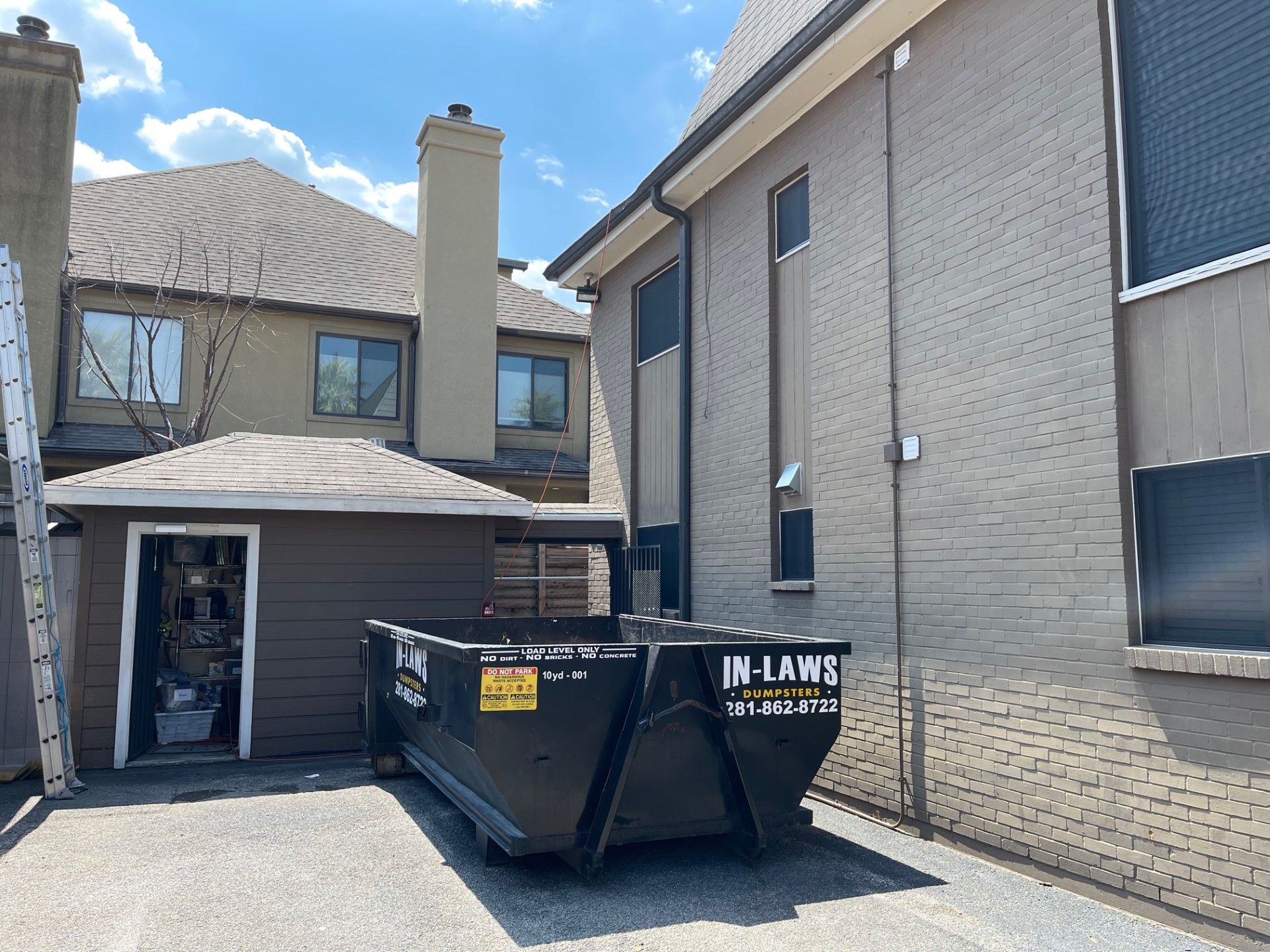
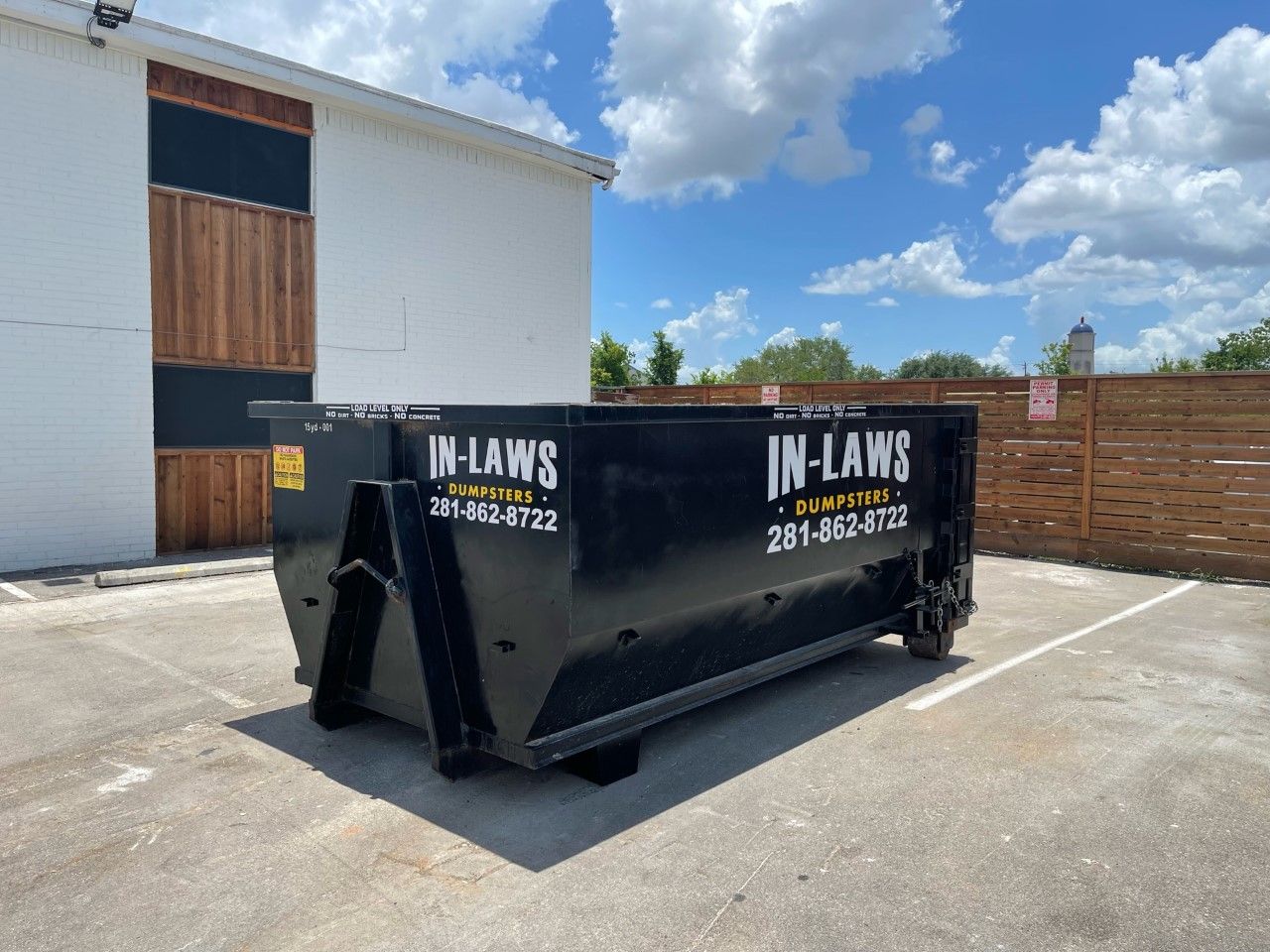
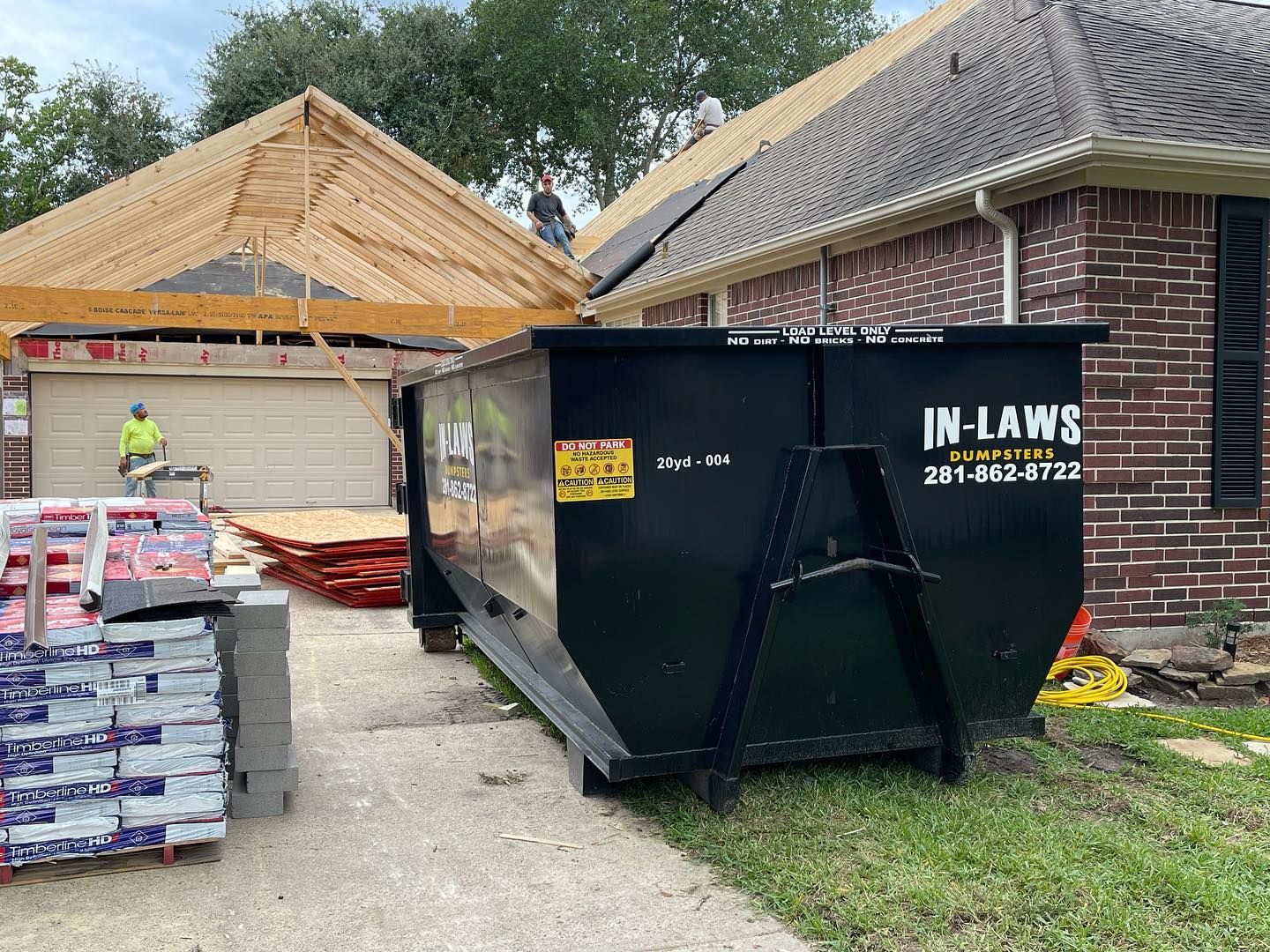
At In-Laws Services, we provide 10-yard, 15-yard, and 20-yard roll-off dumpsters for commercial and residential projects in Houston and surrounding communities. Each dumpster includes a rear door for easier loading, which can be especially useful when crews need to walk bulky materials into the container instead of lifting everything over the side.
Choose the Right Rental Timing
For a fast commercial cleanout, delivery at the beginning of the project often makes the most sense. That way, your team can load materials as they clear offices, storage rooms, and work areas.
If the space is mostly empty but renovations will produce debris, schedule the dumpster for the start of demolition, flooring removal, or fixture replacement. This prevents contractors from creating piles that have to be moved twice.
In-Laws Services offers standard 3-day and 7-day rental options. A shorter rental may work well when a crew has a focused plan and enough labor to complete the cleanup quickly. A longer rental can be useful when the work includes several stages, such as furniture removal, light demolition, repairs, painting, and final cleanup.
Think about the pace of the project honestly. It is better to plan for the actual work schedule than to assume everything will be finished in one afternoon.
Select a Safe Placement Area
The best placement location is close enough to make loading practical without blocking the property’s daily operations.
For many commercial sites, a back parking area, service lane, designated loading zone, or accessible portion of a private lot may work well. The location should give the delivery truck enough room to enter, maneuver, place the container, and leave safely.
Before delivery, remove vehicles, pallets, equipment, loose materials, and other obstacles from the area. Check for low branches, overhead wires, awnings, parking barriers, gates, and tight turns. If the dumpster will sit near a building, make sure doors, loading bays, and emergency access points remain clear.
If you will not be on site at the time of delivery, clearly mark the planned placement area and make sure the site contact understands where the container should go.
Think About Public Right-of-Way Placement
Whenever possible, place a dumpster on private property. A private parking lot, service area, or designated loading space is usually easier to manage than a public street.
If a dumpster must go on a street, sidewalk, or other public right-of-way, check the applicable requirements before delivery. Houston and surrounding communities may have permit, traffic-control, or obstruction rules for containers placed outside private property.
Do not assume that a street location will be available just because there is open space. Commercial areas may have restrictions related to traffic lanes, parking, pedestrians, construction activity, emergency access, or nearby businesses.
A little advance planning prevents a last-minute scramble on delivery day.
Choose a Dumpster Size Based on the Debris
Choosing a dumpster size is not only about the square footage of the building. It is about the amount, type, and density of the materials leaving the space.
A large office can produce a relatively light load if the job mostly involves paper, cardboard, plastic, lightweight furniture, and general trash. A smaller renovation can create a heavier load if it includes flooring, drywall, cabinets, tile, or dense construction debris.
At In-Laws Services, our available dumpster sizes include 10-yard, 15-yard, and 20-yard containers. The right option depends on the project, the loading space, and the amount of debris expected.
When a 10-Yard Dumpster May Work
A 10-yard dumpster can be useful for a smaller commercial cleanout, a storage-room purge, a compact office refresh, or a focused renovation project.
It may fit projects such as:
- Clearing a few offices or a small suite
- Removing limited furniture and bagged trash
- Disposing of shelving, light fixtures, and supplies
- Handling debris from a small flooring or repair project
- Cleaning out a commercial storage area
This size can be a practical option when space is tight or when the cleanup involves a manageable amount of material.
When a 15-Yard Dumpster Makes Sense
A 15-yard dumpster often works well for a medium-sized office cleanout, a retail-suite turnover, or a cleanup that includes furniture and renovation debris.
It can be helpful when crews need room for several bulky items, including desks, chairs, shelving, carpet, packaging, and general waste. It also gives contractors more flexibility during multi-day cleanouts where the amount of debris may grow as repairs begin.
A 15-yard container can be a good middle-ground option when a 10-yard dumpster seems too limiting but the site does not need the capacity of a larger container.
When a 20-Yard Dumpster Is the Better Fit
A 20-yard dumpster is the largest container available from In-Laws Services and is commonly used for larger cleanouts, commercial renovations, furniture removal, and substantial debris loads.
It may make sense for:
- Corporate office move-outs
- Multi-room commercial cleanouts
- Retail or restaurant renovations
- Large furniture and cubicle removal
- Carpet and flooring replacement across several rooms
- Storage-area cleanouts with years of accumulated materials
- General debris from an extensive property turnover
A larger dumpster can reduce the chance that your team will run out of room midway through the project. Still, it is important not to choose size based on volume alone. Heavy materials affect weight limits, so discuss the debris type before booking.
Know What Can Go Into the Dumpster
A commercial cleanout moves faster when workers know what belongs in the dumpster and what needs a separate plan.
Most projects include a mix of ordinary commercial debris. Old desks, office chairs, non-sensitive paperwork, cardboard, broken furniture, carpet, packaging, drywall, wood scraps, and general trash can all add up quickly.
In-Laws Services can help with many common non-hazardous materials generated during cleanouts and renovation work.
Common Commercial Cleanout Materials
Depending on the project, approved debris may include:
- Desks, chairs, tables, and standard office furniture
- Broken shelving and non-hazardous fixtures
- Carpet, carpet padding, flooring, and trim
- Drywall, wood scraps, and light construction debris
- Cardboard boxes and packaging
- General trash and bagged clutter
- Non-hazardous materials from storage-room cleanouts
- Yard debris from exterior cleanup projects
- Old tools and ordinary non-hazardous items
- Certain plumbing fixtures and renovation materials
Load materials steadily as you work. Keeping the space clear helps employees, contractors, and maintenance crews move safely and avoid tripping hazards.
Materials That Need Separate Handling
Not every item from a commercial property belongs in a dumpster. Some materials create safety concerns, require special disposal, or are not accepted in standard roll-off rentals.
Items that should stay out of the dumpster include hazardous materials, flammable liquids, medical waste, asbestos, batteries, propane tanks, electronics, televisions, refrigerators, freezers, non-empty paint containers, dirt, concrete, bricks, and other restricted materials.
Commercial spaces may also contain items that need special attention, such as computer equipment, printers, monitors, confidential records, cleaning chemicals, fluorescent bulbs, or business-specific equipment.
Before the cleanout begins, assign someone to identify these materials. Do not wait until the container is almost full. It is much easier to set aside restricted items during the initial walkthrough than to sort through a loaded dumpster later.
Protect Confidential Information
Commercial cleanouts often involve more than furniture and trash. Offices may contain old files, paperwork, employee records, customer information, financial documents, shipping records, or proprietary materials.
Review cabinets, drawers, storage boxes, and file rooms before anything is thrown away. Sensitive documents should go through the appropriate internal destruction or records-management process before disposal.
A rushed office cleanout should never become a data-security problem. Take the time to separate confidential material from ordinary paper waste.
Organize the Crew Before Loading Starts
A dumpster can make the job more efficient, but it does not replace a plan. The best commercial cleanouts have a clear workflow, a defined crew, and a simple communication system.
Even a small team benefits from knowing what happens first, where materials go, and who makes decisions when something unusual turns up.
Assign Basic Roles
You do not need a large management structure for a commercial cleanout. You do need clarity.
One person should oversee the overall schedule and communicate with the property manager, building staff, or owner. Another person can manage sorting and identify items that should not go into the dumpster. Crew members can focus on clearing rooms, breaking down materials, and loading the container safely.
For larger projects, it may help to assign one person to handle reusable materials, donation items, or equipment transfers. That keeps usable assets from getting mixed into the disposal pile.
Clear One Area at a Time
Avoid trying to empty every room at once. Start in one area, sort the materials, move approved debris to the dumpster, and then continue to the next section.
This keeps hallways and walkways clear. It also makes it easier to track what has been completed.
For example, an office cleanout may begin with the breakroom, then move to storage closets, conference rooms, private offices, common work areas, and finally the loading area. The order will depend on the building layout, but the principle stays the same: finish one zone before creating a new pile somewhere else.
Keep a Path to the Dumpster Open
Commercial properties can become cluttered quickly during a cleanup. A hallway filled with chairs, boxes, old carpet, and dismantled shelving slows everyone down.
Keep a direct path from the work area to the dumpster. Move debris out regularly instead of allowing it to pile up inside the building. The more often the team loads as it works, the less time it spends handling the same material twice.
This also helps keep the building safer for employees, vendors, cleaners, and contractors who may be moving in and out during the project.
Load the Dumpster Safely and Efficiently
The way a dumpster is loaded affects how much it can hold and whether it can be transported safely at pickup.
A commercial cleanout can produce bulky, awkward items. Desks do not stack like boxes. Chairs take up space. Carpet rolls can shift. Shelving can create empty pockets if it is not broken down.
Taking a few extra minutes to load intentionally can make a noticeable difference.
Put Heavy Materials in First
Load heavier materials first and spread them across the bottom of the container. This creates a stable base and keeps the load balanced.
If you are loading furniture, break down what you can. Remove table legs if possible. Flatten cardboard. Dismantle shelving. Cut carpet into manageable rolls. Stack flat materials carefully.
This approach reduces wasted space and helps the dumpster hold more without becoming unstable.
Use the Rear Door When Appropriate
In-Laws roll-off dumpsters include a rear door, which makes it easier to walk certain materials into the container.
For heavy furniture, shelving, boxes, and bulky debris, using the door can be safer than lifting everything over the side. It can also speed up loading for maintenance teams and contractors who are moving materials with dollies or hand trucks.
Keep the area around the door clear and make sure crew members understand how to use it safely.
Keep Everything Below the Top Edge
Do not load materials above the top of the dumpster walls. The container must be safely covered for transport, and overflowing debris can create a safety hazard.
If the dumpster begins to fill faster than expected, pause and reassess. You may be able to break down bulky items, remove empty boxes, or adjust the loading pattern. If the project has grown beyond the original plan, communicate early rather than waiting until pickup day.
Keep the Property Presentable During the Cleanup
A commercial cleanout can create temporary disorder, but it should not make the property look abandoned or unmanaged.
This matters in Houston business districts where neighboring tenants, customers, leasing agents, employees, and prospective renters may see the project in progress. It also matters for safety.
Avoid Curbside Piles
Do not rely on the curb as a holding area for debris. Old furniture, bags of trash, broken fixtures, and carpet rolls can create an eyesore quickly. They can also attract illegal dumping, especially if the materials sit outside overnight.
A dumpster gives your crew a controlled place to load approved debris. It keeps the work area more organized and reduces the chance that other people will add their own unwanted items to the pile.
Check the Site Every Day
At the end of each workday, take a few minutes to walk the property.
Look for loose debris, materials left near doors, items blocking walkways, or trash that has blown across the lot. Houston weather can change quickly, and a windy afternoon or heavy rain can scatter lightweight materials if they are left unsecured.
A daily check helps you catch small problems before they become a larger cleanup issue.
Respect Shared Property Areas
If the commercial property includes shared parking, common driveways, delivery lanes, or loading zones, make sure the dumpster and cleanup crew do not create unnecessary disruptions.
Communicate with neighboring tenants when appropriate. Mark the work area clearly. Keep fire lanes and emergency access open. Avoid blocking customer entrances, employee parking, or scheduled deliveries.
A cleanout can move quickly without becoming a headache for everyone else on the property.
Prepare for Repairs and Renovations
Many commercial cleanouts lead directly into repair or renovation work. Once the old furniture, clutter, and discarded materials are gone, the real condition of the space becomes visible.
You may discover damaged flooring, stained ceiling tiles, outdated cabinets, wall damage, worn fixtures, or storage areas that need attention before the property is ready for its next use.
Clear the Space Before Ordering Materials
Whenever possible, remove old debris before new materials arrive.
A cleared space gives contractors room to work and reduces the chance that new flooring, paint, fixtures, cabinetry, or equipment will be mixed into the cleanup area. It also makes it easier to see the actual scope of repairs.
This is especially important during a fast commercial turnover. When deliveries, contractors, cleaners, and property managers all arrive within a few days of each other, the job can become confusing without a clean staging area.
Keep New Materials Separate
Set aside a protected location for incoming supplies. Keep new materials away from the dumpster and away from the debris path.
It sounds simple, but during a busy cleanout, it is easy for a stack of new trim, boxes of flooring, or unopened fixtures to end up near the disposal pile. Clear labels and a designated storage area help prevent costly mistakes.
Schedule Pickup Around the Last Debris Day
Try to schedule pickup after the final major debris-producing task. If carpet removal happens Monday but cabinet replacement happens Thursday, a three-day rental may not match the actual schedule.
Think through the final workday that will produce significant waste. That may include demolition, fixture replacement, flooring work, or a final sweep of storage areas.
Once the major debris is gone, the dumpster can be picked up and the property can move into cleaning, inspections, staging, or move-in preparation.
Create a Repeatable Commercial Cleanout Process
Property managers and business owners who handle more than one location can save time by building a repeatable process. Every building is different, but the basic order of work stays fairly consistent.
A reliable routine helps prevent missed steps and gives your team a way to move quickly when deadlines are tight.
Use a Simple Project Sequence
A practical commercial cleanout process often looks like this:
- Walk through and document the property
- Confirm access, building rules, and the project timeline
- Identify items to keep, transfer, recycle, secure, or dispose of
- Reserve the dumpster and confirm the placement area
- Clear the property one zone at a time
- Load approved materials as the team works
- Complete repairs, light demolition, or renovation tasks
- Perform a final walkthrough before pickup or turnover
- Remove the dumpster once major debris is finished
This sequence does not need to be complicated. The goal is to keep the work moving forward without creating new piles, missed materials, or last-minute scheduling problems.
Keep Notes for the Next Project
After the cleanout is complete, save what you learned.
Note how much debris the property generated, whether the dumpster size worked well, what materials required separate disposal, and whether access or scheduling created delays. These details can make future cleanouts easier, especially if you manage similar offices, retail suites, warehouses, or rental properties across Houston.
Over time, a simple record of past projects can help you plan more accurately and avoid repeating the same problems.
Why Houston Businesses Use Roll-Off Dumpsters for Cleanouts
A commercial cleanout requires more than a few trash bags and a pickup truck. Large items, multiple rooms, renovation materials, and tight deadlines can make repeated landfill trips impractical.
A roll-off dumpster brings the disposal point to the property. Your team can load debris as it works instead of stopping repeatedly to haul materials away. That helps keep the job organized, especially when several people are clearing a space at once.
At In-Laws Services, we serve Houston and surrounding communities with 10-yard, 15-yard, and 20-yard dumpster rentals for commercial cleanouts, office updates, furniture removal, storage cleanouts, rental unit turnovers, and renovation projects. We work with customers to coordinate delivery and pickup around the project schedule and the site’s available access.
The goal is simple: give your team a reliable place to put the debris so it can focus on getting the property ready for its next stage.
Frequently Asked Commercial Cleanout Questions
What is a commercial cleanout?
A commercial cleanout is the process of removing unwanted materials from a business property, office, retail suite, warehouse, storage area, or other commercial space. It may include furniture, general trash, old fixtures, carpet, shelving, packaging, and non-hazardous renovation debris. At In-Laws Services, we provide roll-off dumpsters that give Houston-area crews a central place to load approved materials during the cleanup.
When should I schedule a dumpster for a commercial cleanout in Houston?
Schedule the dumpster for the first day your team will begin producing substantial debris. For many projects, that means the first day of furniture removal, storage cleanup, demolition, carpet removal, or renovations. We recommend confirming building access, delivery rules, and the placement area before choosing the delivery date.
What dumpster size should I use for an office cleanout?
The right size depends on the amount and type of debris. A 10-yard dumpster may work for a smaller office or storage cleanout. A 15-yard dumpster can fit a medium-sized cleanout with furniture and general debris. A 20-yard dumpster is often useful for larger office move-outs, extensive furniture removal, or multi-room commercial cleanouts. In-Laws Services offers 10-yard, 15-yard, and 20-yard dumpsters.
Can I put office furniture and carpet in a dumpster?
Yes. In-Laws Services accepts many common commercial cleanout materials, including desks, chairs, tables, non-hazardous furniture, carpet, flooring, drywall, wood scraps, cardboard, and general trash. Some materials require separate disposal, so contact us before loading electronics, batteries, appliances, paint, chemicals, propane tanks, or hazardous items.
Do I need permission to place a dumpster at a commercial property?
You may need approval from the property owner, building manager, or site supervisor before placing a dumpster at a commercial property. You should also confirm the planned location does not block parking, loading areas, entrances, fire lanes, or emergency access. If the dumpster must be placed on a public street or sidewalk, check local permit requirements before scheduling delivery.
How long can I keep a dumpster for a commercial cleanout?
In-Laws Services offers standard 3-day and 7-day dumpster rental options. A 3-day rental may work for a focused cleanout with a prepared crew. A 7-day rental may be more useful for a project that includes multiple work stages, such as furniture removal, minor demolition, repairs, and final cleanup. Extension options may be available when the project requires more time.
A successful commercial cleanout is not about moving debris as fast as possible. It is about setting up the project so each part of the work has a place, a schedule, and a clear next step. When the cleanup is planned well, the property stays safer, the crew wastes less time, and the transition to repairs, renovations, or a new tenant becomes much smoother.
For Houston business owners, contractors, and property managers, a roll-off dumpster can be one of the simplest tools in that process. It turns a scattered cleanup into an organized project and helps keep unwanted materials from taking over the property.