
30 Yard Dumpster Rentals for Commercial Jobs: In-Laws Services' Complete Guide
30 Yard Dumpster Rental in Houston, TX: Costs, Sizes & Commercial Uses
A commercial cleanup rarely stays confined to one neat pile. An office renovation starts with a few partitions, then adds flooring, cabinets, packaging, and everything someone left in the storage room. A retail turnover can produce bulky fixtures before the contractor even begins work. By the time several crews share the property, finding somewhere to put the debris becomes part of keeping the job moving.
At In-Laws Services, we offer 30 yard dumpster rentals for larger cleanouts, renovations, and commercial projects throughout Houston, TX, and neighboring communities. Our 30-yard roll-off includes 3 tons of disposal weight, with rental options starting at $625 for seven days or $675 for 14 days. It gives crews room for approved bulky debris without making them work around scattered piles.
The important part is choosing it for the right reasons. A larger container offers more volume, but that does not mean every heavy material belongs inside it. Here is how we help businesses and contractors plan a 30 yard dumpster rental around the actual job, from the first cleanup to the final pickup.
What Is a 30 Yard Dumpster Rental?
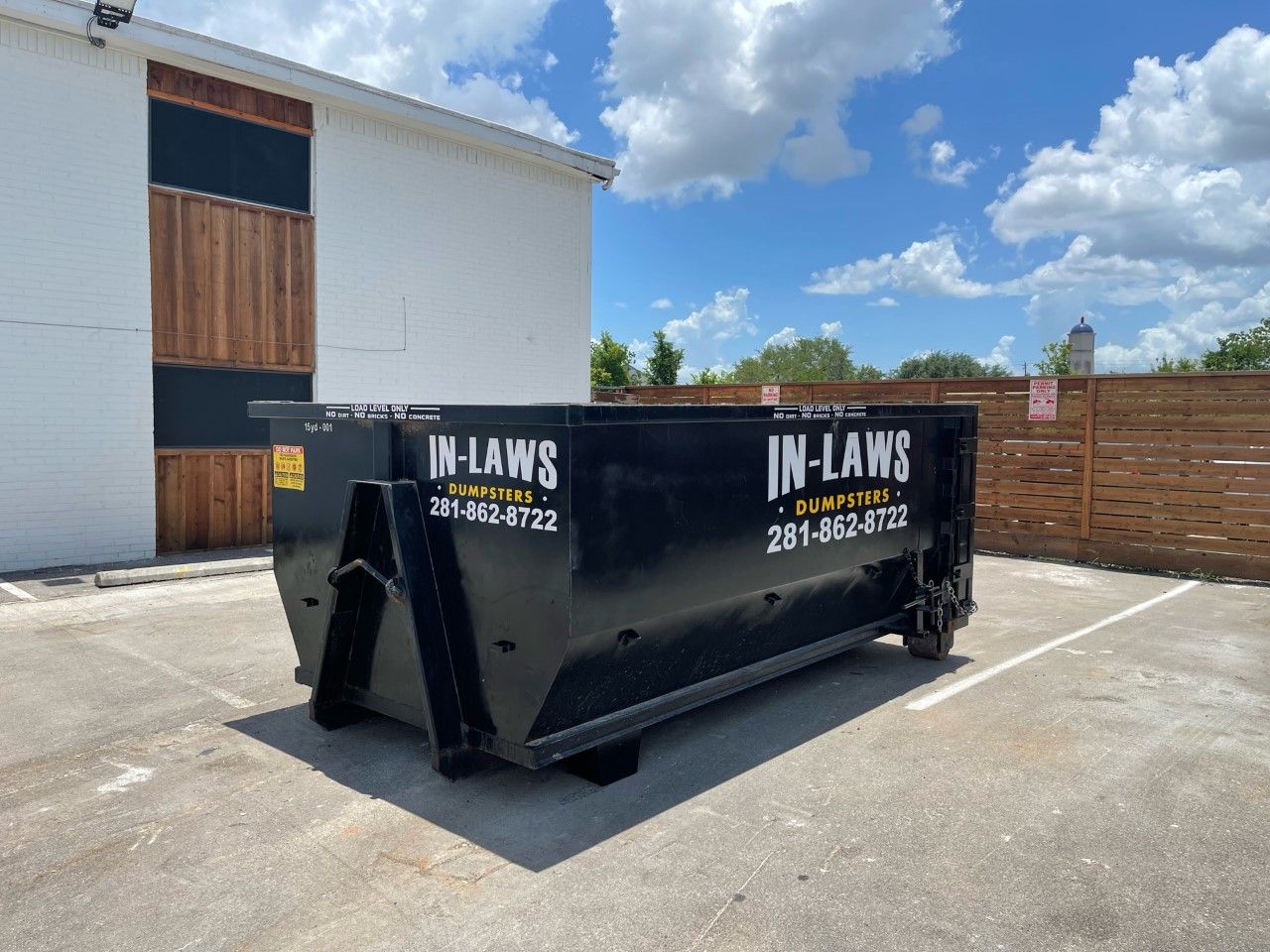
A 30 yard dumpster rental provides a roll-off container with a nominal capacity of 30 cubic yards. That measurement describes volume: the space available for debris. It does not describe the container’s included disposal weight or tell you its exact exterior dimensions.
For a commercial project, the distinction matters. Discarded shelving, packaging, and dismantled cabinetry can occupy considerable space. Dense debris may use much less room while adding weight quickly. You need to consider both before choosing a container.
Our 30-yard dumpster suits projects that produce a substantial amount of approved material, particularly when that material is bulky. It also gives a crew a central place to load debris as work progresses.
We ask about the project before recommending a size. “We’re renovating a business” gives us a starting point. “We’re removing office partitions, replacing cabinets, and clearing two storage rooms over ten days” gives us a much better picture of what you need.
Our 30-Yard Dumpster Specifications and Rental Options
When you compare commercial dumpster rentals in Houston, look past the container size. The rental period, included tonnage, loading rules, and delivery requirements all affect whether the arrangement fits your project.
Our dedicated 30-yard dumpster page lists these details:
- Container capacity: 30 cubic yards.
- Included disposal weight: 3 tons, equivalent to 6,000 pounds.
- Seven-day rental: starting at $625.
- Fourteen-day rental: $675.
- Availability: confirm with us before scheduling.
- Loading requirement: distribute approved material evenly and keep it below the container’s top edge.
We also confirm delivery details and any charges that may apply to your address or materials before booking.
Seven Days or Fourteen Days?
A seven-day rental may fit a concentrated cleanout where your crew can remove, sort, and load everything within one workweek. An empty office suite with a defined scope is one example.
The 14-day option gives you more time when removal happens in stages. Perhaps the first crew handles demolition, another removes fixtures later, and the property manager finishes clearing storage areas toward the end of the project.
Our listed two-week rate is $50 more than the seven-day rate. Choose the period around the work you expect to complete, not the earliest possible finish date. If your schedule changes, contact us before pickup so we can discuss availability and any additional charges.
What About the Dumpster’s Length, Width, and Height?
We confirm the actual dumpster dimensions and truck clearance requirements before delivery. Our published 30-yard page does not list fixed exterior measurements, so we do not recommend planning a tight placement area around dimensions borrowed from another rental company.
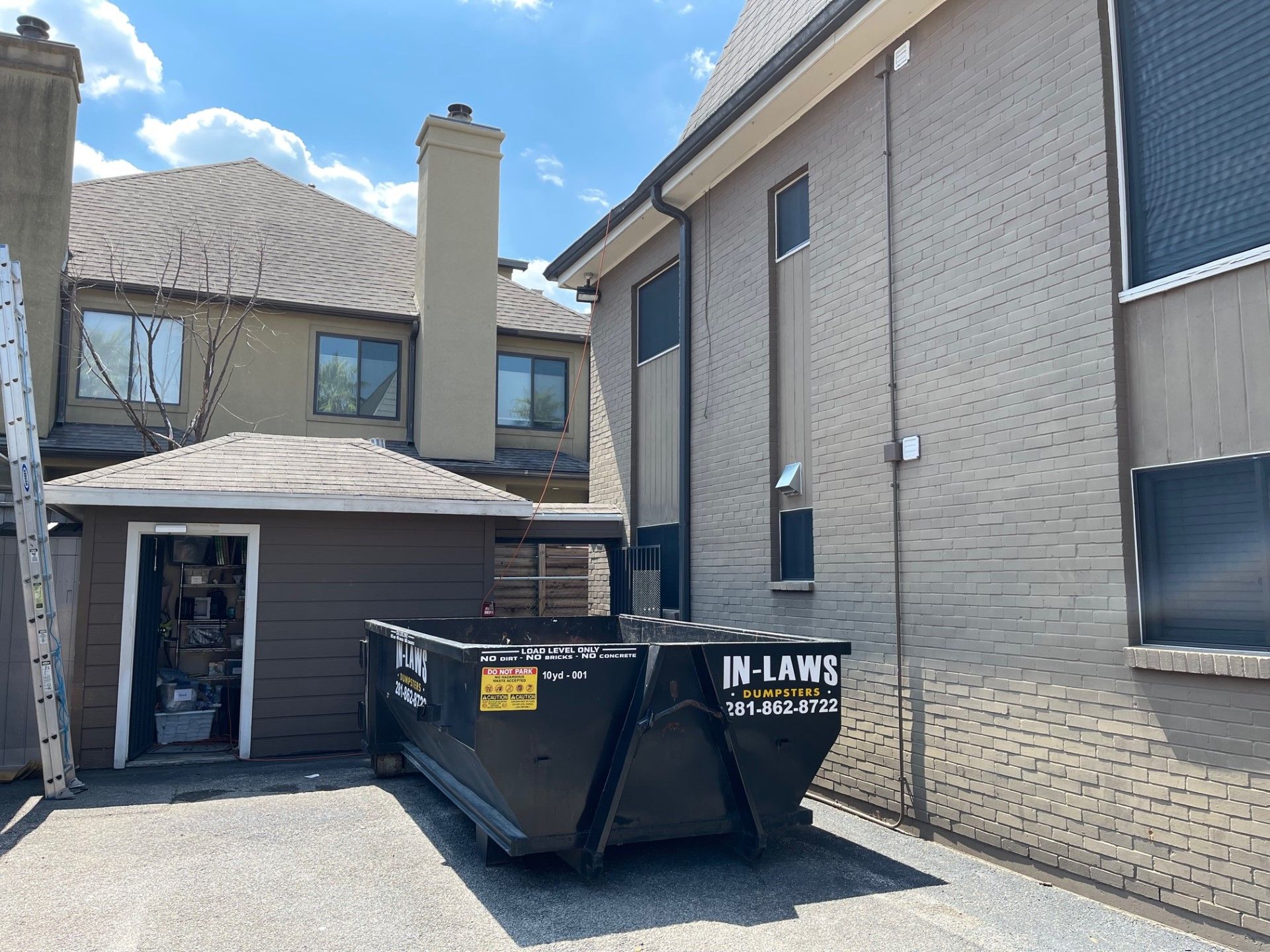
Tell us about the proposed location, access route, gates, overhead wires, and anything else that could affect delivery. A container that fits in a parking area still needs an accessible approach for the truck.
Which Commercial Projects Are Best for a 30-Yard Dumpster?
A 30-yard roll-off makes the most sense when your job produces enough approved bulky debris to justify the space. The size of the building alone does not settle the question. What you remove matters more than the square footage printed on the lease.
Office Renovations and Tenant Improvements
Office renovations can combine several waste streams in one project. You might remove cabinetry, dismantle approved partitions, replace interior finishes, and clear unwanted furnishings before construction starts.
A 30 yard dumpster rental can provide a shared loading location throughout that work. Instead of leaving each crew to create its own disposal pile, the project has one designated container for approved debris.
Before delivery, separate items that need another disposal route. Do not assume computers, batteries, leftover chemicals, or unidentified containers belong with ordinary renovation waste. Give us the material list so we can clarify what we can accept.
Retail Store Cleanouts and Remodels
A store cleanout often produces awkward items rather than neatly stackable trash. Displays, shelving components, counters, and packaging can consume space long before the cleanup looks especially large.
That is where extra volume becomes useful. A 30-yard container can accommodate a substantial amount of approved bulky material while a crew prepares the space for its next use.
Still, describe the fixtures before booking. A store clearing lightweight displays has a different load from one removing heavy interior materials. The same floor area can produce very different disposal needs.
Commercial Property Turnovers
Property managers often inherit more than an empty suite. Storage rooms hold abandoned belongings. Back offices contain outdated furniture. Maintenance areas collect materials from earlier projects.
A larger dumpster can help bring those separate cleanups together when the materials meet our loading rules. It can also serve a property turnover that includes both clearing the space and removing approved renovation debris.
The challenge is keeping control of the load. If several tenants or contractors can reach the dumpster, tell everyone what belongs inside. One unapproved contribution can complicate an otherwise straightforward cleanup.
Construction and Larger Remodeling Jobs
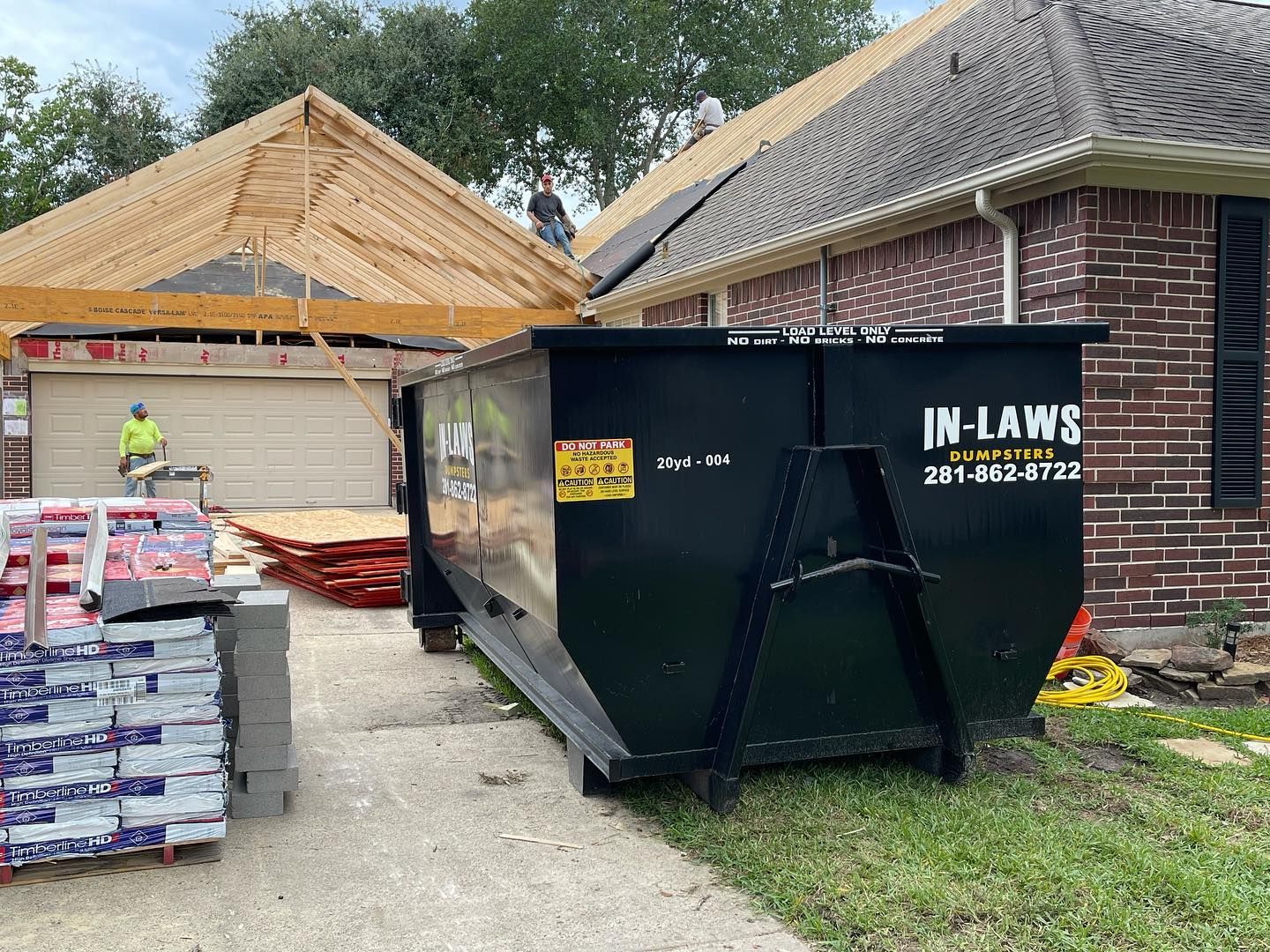
Our 30-yard roll-off is an option for construction and renovation debris, including approved bulky demolition material. It can serve a project where waste accumulates across several work areas or arrives in distinct phases.
That does not make it a catch-all for everything removed from a commercial building. Material approval still applies, and dense debris requires particular attention.
For a Houston contractor planning several days of removal, we recommend discussing the sequence of work as well as the expected volume. Knowing when the debris will appear helps us evaluate the rental period alongside the container size.
When a 30-Yard Dumpster May Be the Wrong Choice
More space is useful only when your project needs it. A small office cleanout, limited fixture removal, or single-room renovation may fit a smaller container.
We also offer 10-yard, 15-yard, and 20-yard options. Those sizes are worth discussing when the expected debris volume is modest or the delivery area is restrictive. You do not need our largest dumpster simply because the property is commercial.
Heavy material presents a different concern. A load can reach its included weight allowance while leaving plenty of empty space above it. Choosing a larger container does not change that relationship.
Our published 30-yard loading guidance does not accept concrete, dirt, bricks, or hazardous waste. If your project includes those materials, discuss them with us before booking rather than planning to mix them into the load.
Roofing debris also needs a separate conversation. Tell us what you are removing and how much you expect. We can address the proposed material and weight considerations before you commit to a rental.
Understanding Volume and Weight Before You Load
One of the easiest mistakes to make with a commercial roll-off dumpster is treating visible space as permission to keep loading.
Our 30-yard rental includes 3 tons. That is an included disposal allowance, not a promise that any material can fill the container to the rim.
Picture two different cleanouts. One crew loads bulky, lightweight fixtures with gaps between them. Another loads compact renovation debris that packs tightly. The second container may hold much more weight even if it appears less full.
The practical lesson is simple: plan around the material, not just the pile.
Describe the Load in Plain Terms
You do not need a perfect debris calculation when you call. Start with what you know:
- What business or building are you clearing?
- Which fixtures or finishes are coming out?
- Does the work involve demolition?
- Will several crews use the dumpster?
- Are any materials unusually heavy or difficult to identify?
Specific descriptions help us have a useful conversation. “Mostly old office cabinets and packaging” tells us more than “commercial waste.”
Do Not Confuse Included Weight With Loading Permission
Material restrictions and weight allowances answer different questions. An item does not become acceptable simply because it weighs very little. Likewise, an approved material can still contribute enough weight to affect your final charges.
Keep both considerations in the plan. Confirm acceptance first, then discuss how the expected load relates to the included tonnage.
Planning Delivery at a Houston Commercial Property
The best dumpster location is not necessarily the empty space closest to the door. It needs to work for the delivery truck, the loading crew, and the people still using the property.
At an occupied Houston business, that might mean balancing a short debris route with employee parking, customer access, and scheduled deliveries. At a vacant property, the concern may be a narrow gate or limited turnaround space.
Walk the route before delivery day. Look at it from the street entrance all the way to the proposed placement area.
Choose a Firm, Accessible Spot
We ask for a firm placement area and a clear truck approach. Tell us about tight access, gates, and overhead wires in advance.
Also explain how the property operates. If a loading area stays busy in the morning, mention it while arranging delivery. If the gate requires a code or an on-site contact, have that information ready.
These details are easy to overlook when everyone is focused on the renovation itself. They are much harder to address when a truck arrives and cannot reach the intended spot.
Coordinate With the Property Owner or Manager
A tenant arranging a dumpster should confirm placement with the person responsible for the property. Shared parking areas and loading zones may have building-specific restrictions.
If you propose placing the container on a street or other public property, check the applicable local requirements before scheduling. Our website advises customers to contact their city or county about permit requirements for the specific location.
Do not assume a Houston address and an address in a neighboring municipality follow identical placement procedures. Confirm the details for the actual property.
How to Load a Commercial Dumpster Without Creating Extra Problems
Good loading starts before the first item goes into the container. Give the crew clear instructions, identify materials that need separate handling, and decide who will answer disposal questions during the job.
It does not need to become a complicated system. A short conversation at the beginning can prevent a confusing mix of materials later.
Keep Debris Below the Top Edge
Our loading instructions require debris to stay below the container’s top edge. Do not build a pile above the walls because the last few items seem too inconvenient to keep out.
Check the fill level during the project, not only at the end. Long or irregular pieces deserve attention because they may extend above the container even when the rest of the load sits lower.
If you are running out of room, contact us to discuss the situation. Do not assume an overfilled dumpster is ready for pickup.
Distribute Approved Material Evenly
Load across the available space rather than concentrating everything in one area. Our published instructions call for even loading.
For bulky approved items, consider how the pieces fit together before the crew starts tossing them in. Where safe and appropriate, dismantling fixtures can reduce awkward empty spaces. Never have workers climb into the dumpster or attempt risky loading to recover a little room.
Set Aside Uncertain Materials
Commercial storage spaces can contain items nobody remembers purchasing. If you uncover an unlabeled container or an unfamiliar material, leave it out while you ask questions.
Our rules prohibit hazardous waste, and our website also identifies flammable liquids among prohibited materials. Do not mix unknown substances into ordinary debris or treat the dumpster as a way to empty every remaining container on the property.
Building a Realistic Commercial Dumpster Budget
Our published 30 yard dumpster rental prices give you a starting point: $625 for seven days or $675 for 14 days, including 3 tons.
The final arrangement still depends on your delivery address, materials, rental needs, and any applicable additional charges. Ask about those details before approving the booking.
Our general website lists weight-overage and extension fees, while our dedicated 30-yard page directs customers to confirm extra-weight and additional-day charges. For a 30-yard commercial rental, we recommend confirming the applicable terms directly rather than carrying assumptions over from another dumpster size.
- Ask these questions when reviewing the rental:
- What rate applies to this delivery address?
- What additional weight charges apply?
- What happens if the project needs more time?
- Are there location-related charges?
- What should we do if the container fills before the work ends?
A useful budget reflects the likely project, not just its best-case schedule. If two weeks better matches the scope, account for that from the beginning. If heavy debris is involved, discuss it before anyone starts loading.
Matching the Rental to Your Work Schedule
Delivery should support the work rather than become another obstacle at the site. Arrange the dumpster around the first substantial debris-producing phase, and make sure the placement area will actually be available.
For a retail turnover, that may mean scheduling after the outgoing tenant finishes moving. For an office renovation, it may mean coordinating with the contractor responsible for initial removal.
Think about the end of the rental, too. A final walkthrough sometimes reveals additional items, but the dumpster cannot remain indefinitely without a conversation about scheduling and charges.
Tell us when your plans change. Our 30-yard page asks customers to contact us if they need schedule adjustments. Availability matters, so an extension or other change should be discussed rather than assumed.
We also recommend identifying one on-site contact. When several businesses or subcontractors share a property, a clear point of contact makes delivery instructions, material questions, and pickup coordination much less confusing.
Renting a 30-Yard Dumpster in Houston and Surrounding Areas
We serve Houston and neighboring communities, with our dedicated 30-yard page identifying Houston, Channelview, Crosby, Baytown, and Pasadena. Our broader service area also includes communities around East Houston such as Highlands, Sheldon, Jacinto City, Galena Park, Deer Park, La Porte, South Houston, Humble, Atascocita, and Huffman.
For a 30-yard rental, give us the exact delivery address so we can confirm service and availability. A city name alone does not tell us everything about the route or property access.
Our website describes a regular service area around East Houston and notes that additional charges may apply farther out. We can discuss locations beyond that area, but do not assume every address carries the same delivery terms.
Whether you manage a Baytown commercial property or coordinate an office renovation in Houston, the useful starting information stays the same: address, dates, materials, and placement plan. With those details, we can discuss the rental against the actual work.
What to Have Ready Before Booking
You can make the initial call more productive with a few minutes of preparation. There is no need for a formal waste report. Just gather the information that affects the container and delivery.
Have these details available:
- The full commercial property address.
- Your preferred delivery and pickup dates.
- A description of the cleanup or construction work.
- The main materials you expect to load.
- Any heavy, unusual, or uncertain items.
- The proposed placement area.
- Gate, access, and on-site contact information.
If you are deciding between sizes, describe the scope instead of guessing which container to request. We can discuss our 30-yard option alongside the smaller dumpsters we offer.
In-Laws Services is a veteran-owned, family-operated business serving Houston-area projects. To check 30-yard availability, call 281-862-8722. We will review the job details, confirm the relevant rental terms, and address placement and loading questions before delivery.
Frequently Asked Questions About Commercial 30 Yard Dumpster Rentals
How much does a commercial 30 yard dumpster rental cost in Houston?
Our 30-yard dumpster rental starts at $625 for seven days or $675 for 14 days. Both options include 3 tons of disposal weight. We confirm availability, delivery details, and any charges related to your address, materials, extra weight, or additional rental time before booking.
What commercial projects are suitable for a 30-yard dumpster?
We offer our 30-yard dumpster for office and retail cleanouts, commercial renovations, property management projects, construction debris, and approved bulky demolition material. We review the type of debris and project schedule before determining whether this size fits. A smaller container may suit a limited cleanout.
How much weight is included with your 30-yard dumpster rental?
Our 30-yard rental includes 3 tons, or 6,000 pounds, of disposal weight. The included weight allowance is separate from the container’s 30-cubic-yard volume. A heavy load can reach the allowance before the dumpster looks full. We ask customers to discuss dense materials before loading.
Can concrete, dirt, bricks, or roofing debris go in your 30-yard dumpster?
Our published loading rules do not accept concrete, dirt, bricks, or hazardous waste. Roofing debris requires a discussion with us before booking because the material and expected weight affect the rental plan. The 3-ton included allowance still applies; unused space does not remove material restrictions.
How much space do you need to deliver a 30-yard dumpster?
We confirm the dumpster’s dimensions and truck access requirements before delivery. We need a firm, accessible placement area with a clear approach and overhead space. Tell us about gates, overhead wires, tight turns, or other access restrictions when discussing the property. Do not plan around another company’s container measurements.
Can I rent a 30-yard dumpster for a commercial project outside Houston?
We serve Houston and neighboring communities, including Channelview, Crosby, Baytown, and Pasadena. We confirm 30-yard service and availability using the exact delivery address. Additional location-related charges may apply, particularly outside our regular service area, so we review those details before scheduling the rental.